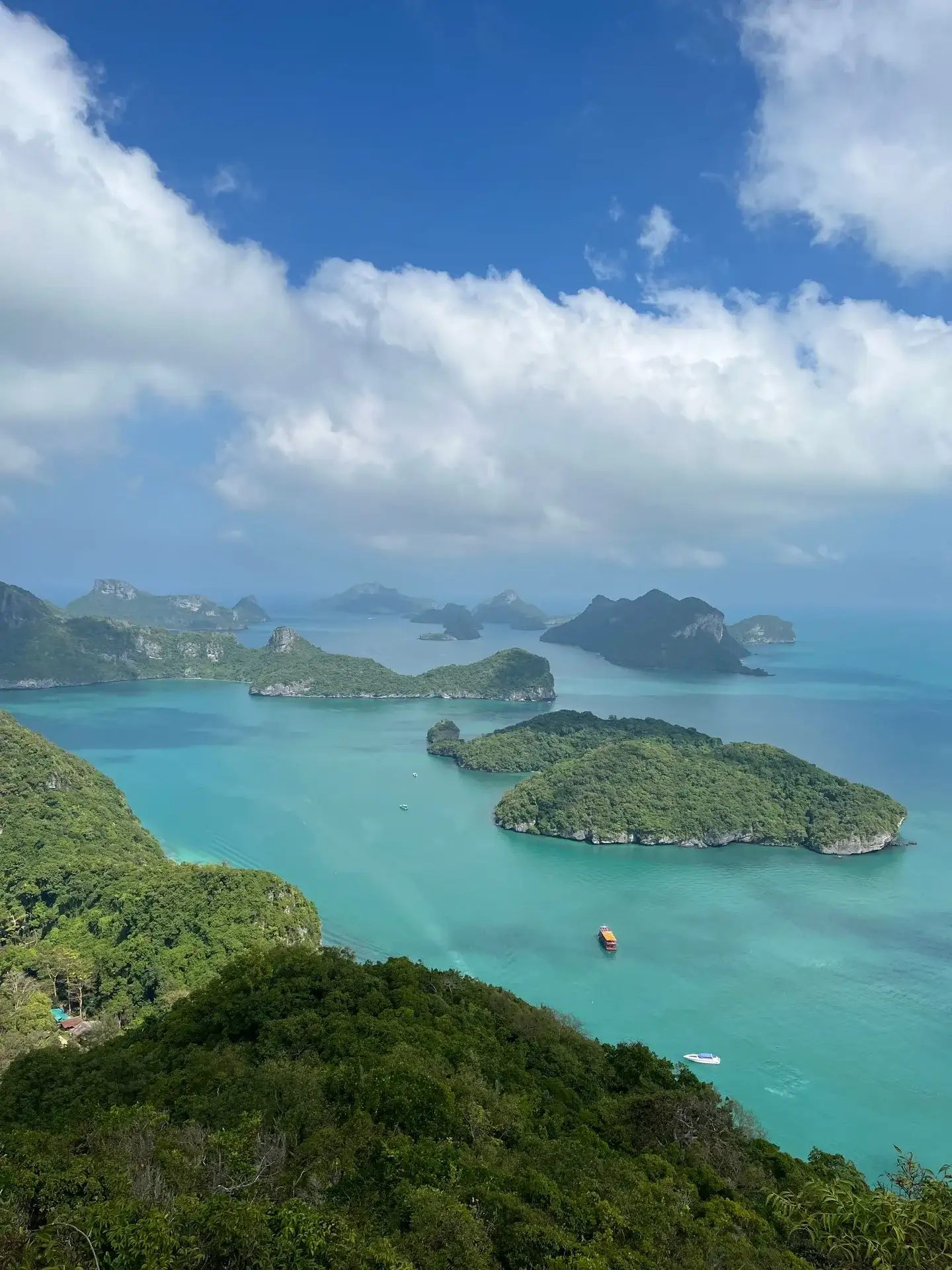
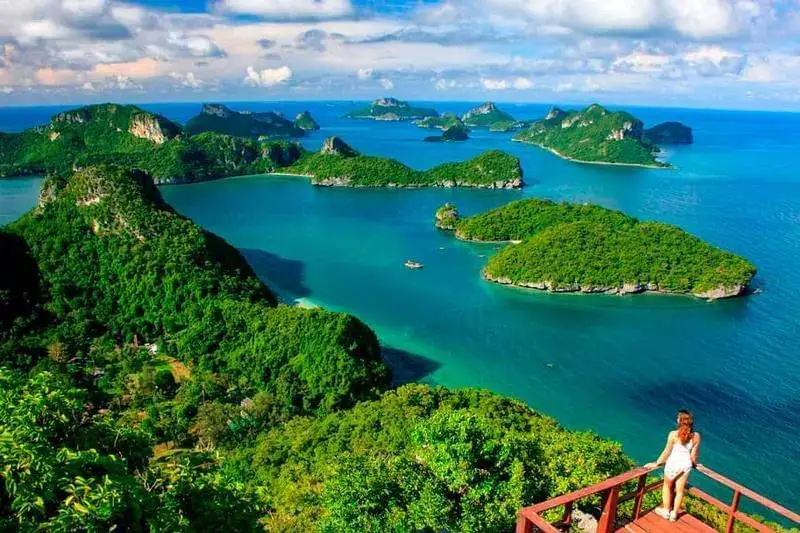
- Swimming in the Emerald Lake on Koh Mae Ko is not allowed; you see it from the viewing platform at the top of the stairway.
- Do not feed the dusky langurs on Wua Ta Lap or the fish on the reef, and do not stand on the coral.
- Kayaking in the national park is allowed only from 5 years old, without exceptions.
- The park fee is ฿300 per adult and ฿150 per child in cash, and the park is usually closed from 1 November to 15 December.
- Drone and sunscreen rules can change, so check the current rules before the trip rather than relying on old advice.
A langur sits on a branch two metres away, staring at the banana sticking out of your bag, and half the beach is waiting to see what you do next. That moment is where most of the ang thong rules come from. The park is a protected place first and a day out second, and a few simple habits keep it that way.
Below are the firm rules that come from the park and the tour companies, and the good manners that every guide will thank you for. Where a rule can change, I say so, because old advice on the internet is often out of date.
What are the main Ang Thong rules?
The short version: no swimming in the Emerald Lake, no feeding animals, no standing on coral, and kayaks only from 5 years old. Add the park fee in cash and the annual closure, and you know the rules that actually decide your day.
| Rule | Where it matters | Why |
|---|---|---|
| No swimming in the Emerald Lake | Koh Mae Ko | The lake is protected; you see it from above |
| Do not feed the langurs or the fish | Wua Ta Lap beach, the reefs | Human food harms them and changes how they behave |
| Do not stand on the coral | Snorkeling stops | The reefs of the park recover slowly |
| Kayaking from 5 years old only | Every kayak stop | Park rule, without exceptions |
| Park fee in cash | On arrival in the park | ฿300 per adult, ฿150 per child, unless your tour includes it |
| No visits during the annual closure | The whole park | Usually closed from 1 November to 15 December to let nature recover |
The closure dates are announced by the national park each year, and no tours run while it is closed. If you are planning for November or December, read what the annual closure means for your trip before you book flights around it.
Can you feed the monkeys and the fish?
No. Please do not feed the dusky langurs, the long-tailed macaques or the fish. Feeding wild animals is the most common mistake visitors make in Ang Thong, and it is always done with good intentions.

Families of dusky langurs live in the trees around the park headquarters on Wua Ta Lap, and they often come close to the beach. They eat leaves, fruit and flowers, and their stomachs are not made for crisps, bread or sweets. Monkeys that learn to expect food from people also start grabbing bags and can bite.
The same goes for the reef. Throwing bread into the water draws crowds of fish for a photo, but it changes what they eat and dirties the water over the coral. If you want to see more fish, swim slowly and keep still; they come closer on their own.
Practical habits that help:
- Keep food inside a closed bag on the beach, not in an open tote.
- Do not walk around eating fruit under the trees.
- Watch the langurs from a few metres away and let them choose the distance.
- Never hold food out for a photo, even as a joke.
If you want to know more about who lives in the park, the Ang Thong wildlife guide covers langurs, hornbills, otters and whales.
Can you touch or stand on the coral?
No. Do not stand on the coral, touch it or kick it with your fins: the reefs of the park recover slowly, and one careless step can break years of growth.
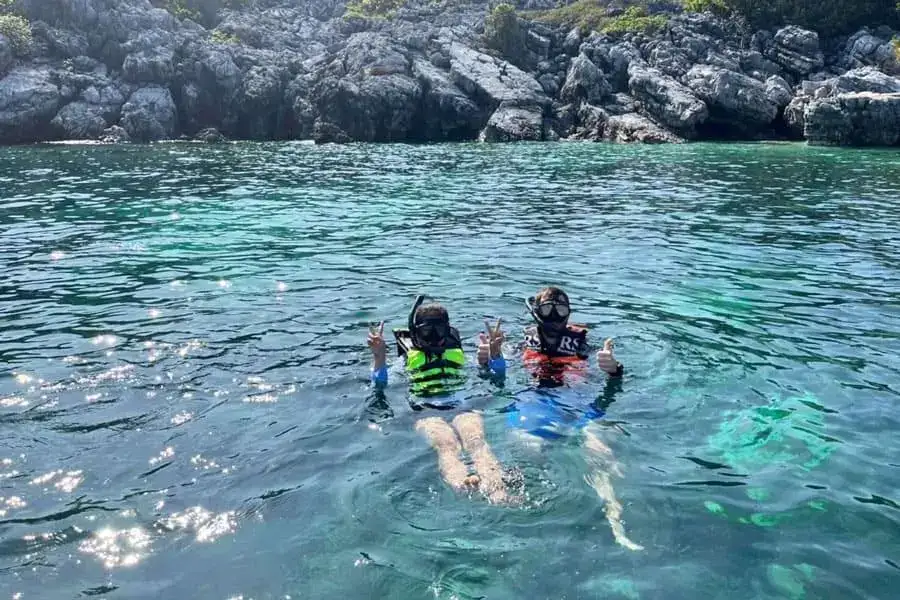
The snorkeling stops are shallow, which is great for beginners and hard on the coral. The life jacket handed out on the boat is your friend here: it keeps you floating on the surface, so you never need to put a foot down to rest. If you get tired, signal the guide or swim back to the boat rather than standing up.
Sea urchins are another good reason to keep your feet up. Their spines break off in the skin and hurt for days.
Gloves sound like a clever idea, but they only make people braver about grabbing rocks and coral. Leave them at home, keep your hands folded or by your sides, and you will see more anyway: fish stay close to a calm swimmer and scatter from one who is splashing and reaching. Underwater photos follow the same rule. Hover above the reef, do not hold on to it to steady the shot.
What about sunscreen?
Sunscreen rules in Thai marine parks can change, so check the current guidance before your trip. The safe choice is a mineral, reef-friendly sunscreen, put on at least twenty minutes before you swim, plus a rash guard or a T-shirt in the water.
A shirt is honestly the better sun protection anyway. It does not wash off, it does not sting your eyes in the mask, and it leaves nothing in the water.
Can you swim in the Emerald Lake?
No. Swimming in Thale Nai, the Emerald Lake on Koh Mae Ko, is not allowed, and the lake is closed to boats and kayaks too. You see it from a viewing platform at the top of a stairway with handrails.
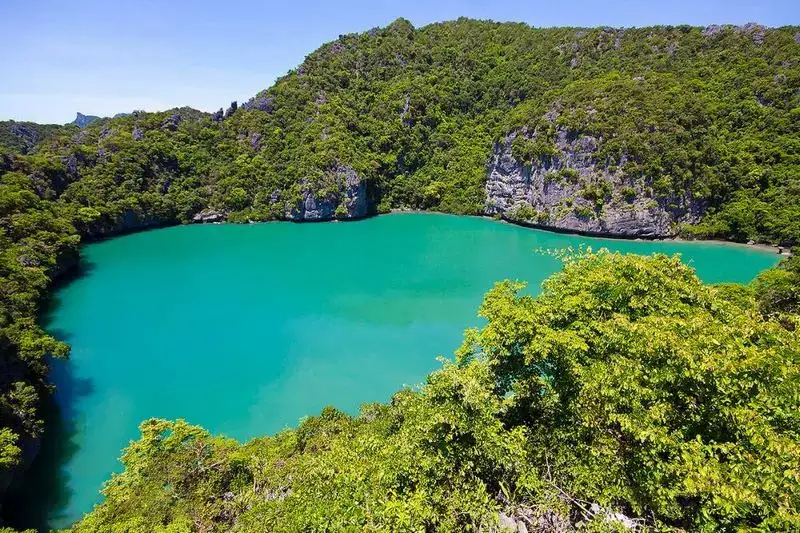
The lake is a closed ecosystem, connected to the sea only through tunnels in the rock. The park keeps people out of the water to protect it, and the guides take this seriously. Do not climb over the railing for a better photo; the view from the platform is the view.
The climb is short but steep in places. Wear shoes with grip and take water. The Emerald Lake guide has the details on the stairway and which tours stop there.
Trails, rubbish and souvenirs: what is expected?
Stay on the marked paths, take every bit of rubbish back to the boat, and leave shells, coral, stones and plants where you found them. These are the habits that keep the beaches looking the way they do in the photos.
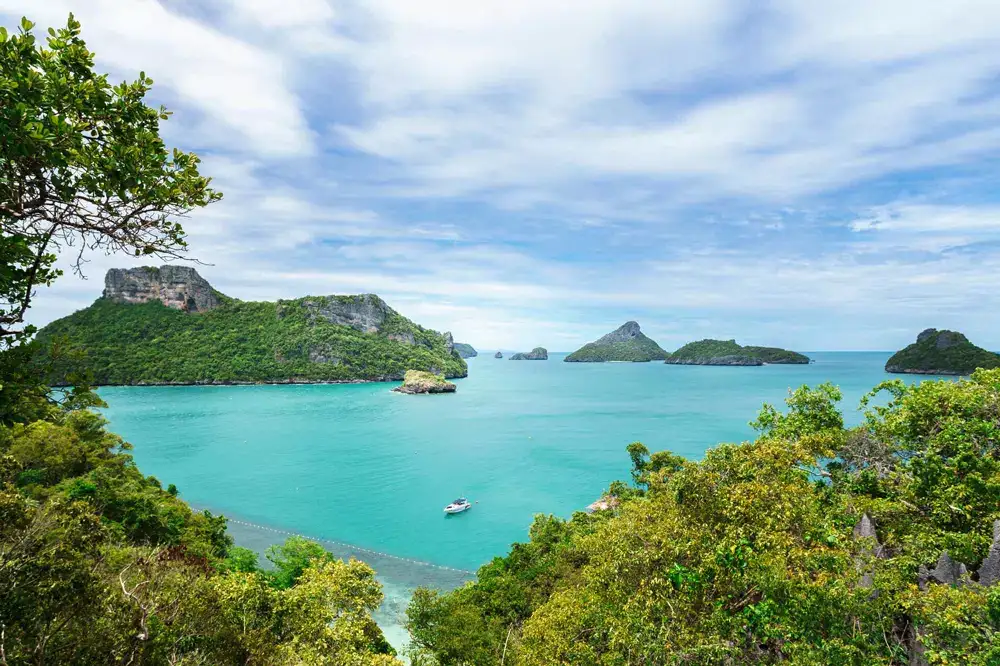
On Wua Ta Lap the trail to the viewpoint is about 500 meters, steep and partly over rocks. Cutting corners loosens soil and damages roots on slopes that are already thin. The rock is sharp too, so staying on the path protects your ankles as much as the forest.
The cliffs are also home to the Ang Thong lady's slipper, a rare orchid and the symbol of the park. Look, photograph, never pick.
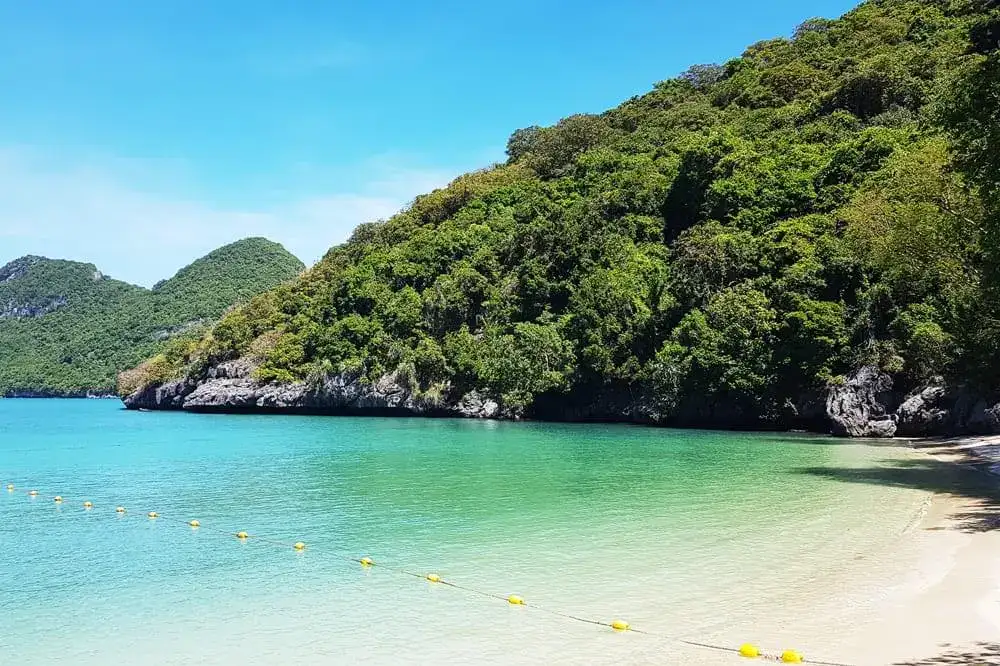
With rubbish, my rule is simple: if you brought it, it goes home with you. That includes cigarette ends, bottle caps and the wet wipes that always seem to escape from bags. A small zip bag in your daypack solves it.
Can you fly a drone in Ang Thong?
Possibly, but do not assume it: drone rules in Thailand and in its national parks are strict and can change, so check the current rules, and any permission you may need, well before your trip.
I am not going to give you a list of requirements here, because what was true last year may not be true on your date. Ask when you book and we will tell you what we know, and on the day ask the guide before you take off. The captain and the guide can ask you not to fly, and their word is final on the boat.
Even where flying is allowed, be considerate. Do not fly low over langurs, over people on the viewpoint or over swimmers. A buzzing drone at the top of the Wua Ta Lap trail spoils the one quiet moment other people climbed 500 meters for.
Is alcohol allowed on the boats?
Alcoholic drinks are not included on any of the Ang Thong tours; soft drinks and water are. Whether you can buy or bring alcohol depends on the boat, so ask when you book rather than turning up with a cooler.
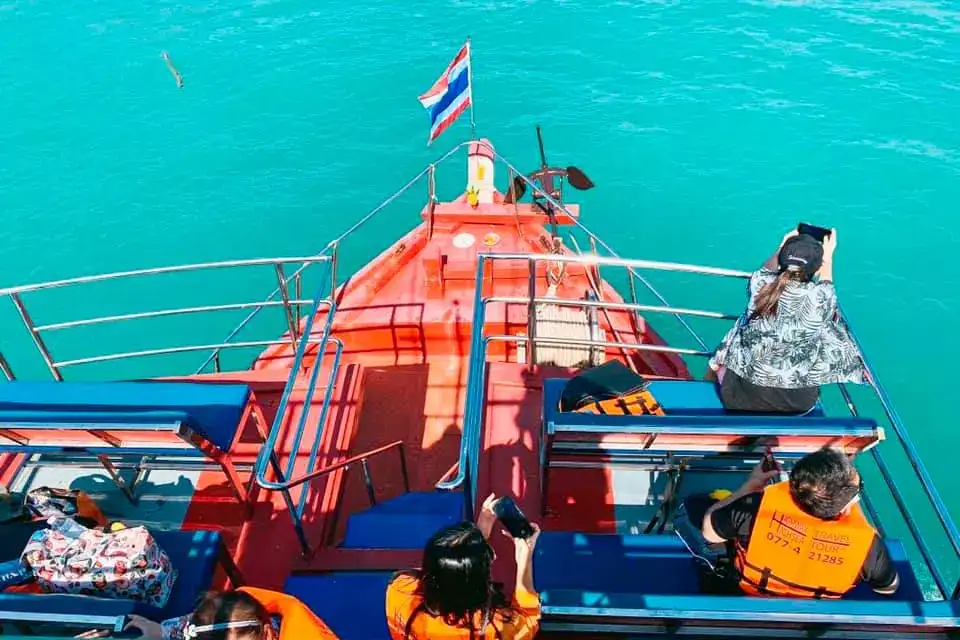
My honest advice: keep the beer for the evening. Snorkeling, steep stairs, a 500-meter trail and strong sun are a bad mix with alcohol, and the guide is watching the water for people who are struggling. The day is safer and more fun sober, and the island bars will still be there at sunset.
On the Red Baron, a slow sailing cruise with meals on board, the mood is more relaxed than on a speedboat, but alcohol is still not part of the price.
Tour rules worth knowing before you book
A few rules come from the tour companies rather than the park, and they catch people out at the pier. The most important: the captain decides about the weather and may change the route or the order of stops.
- Bring your passport number for the insurance; a photo of the passport is enough.
- Speedboat tours are not booked for pregnant women.
- Children under 5 do not kayak in the park, without exceptions.
- Carry cash for the park fee unless your tour includes it.
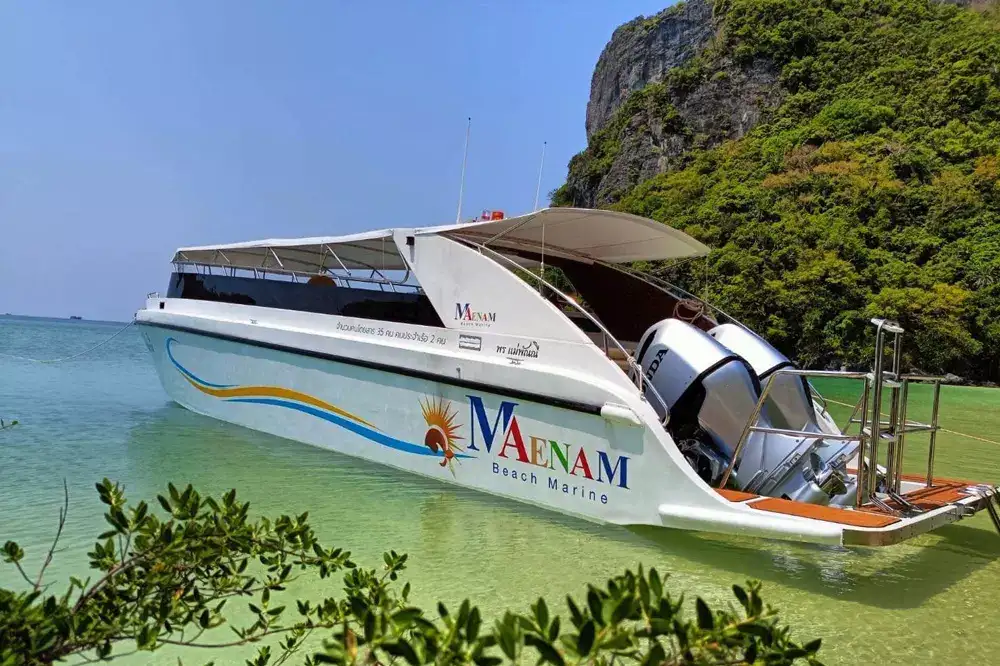
If you want a tour where there is nothing to pay on the day, the VIP speedboat and the Red Baron include the park fee; if you want the classic day at a good price, the speedboat; and on a budget, the big boat.
- Days
- Tue, Thu, Sat
- Time
- 07:00-17:30
- Boat
- Small group, max 16
- Park fee
- Included
- Days
- Daily
- Time
- 07:40-16:30
- Boat
- Shared speedboat
- Park fee
- ฿300 extra
- Days
- Daily
- Time
- 07:30-17:00
- Boat
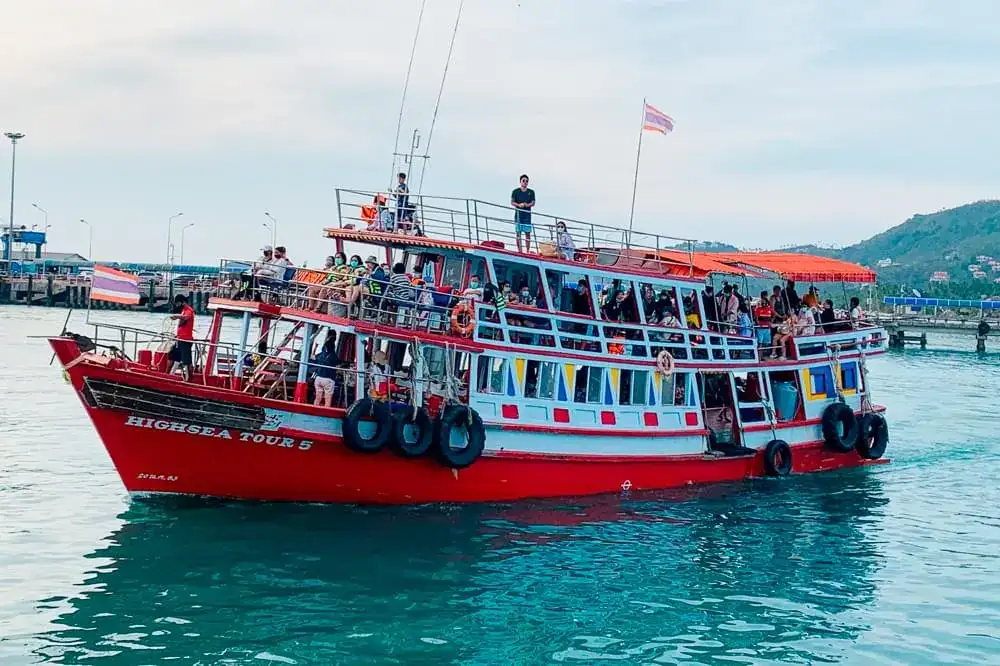
- Large tourist boat
- Park fee
- ฿300 extra
The full booking and payment conditions are in the terms and conditions. Read them once, pack a closed bag for your snacks, and you will be the guest the guide is happy to see on the boat.
Questions and answers
Is there a fine for feeding the monkeys in Ang Thong?
I would not rely on any figure you read online, because park enforcement changes. The simple answer is: do not feed them at all. Human food makes the langurs ill and teaches them to grab bags.
Can I take shells or sand home from Ang Thong?
Leave them on the beach. Shells, coral, stones and plants belong to the park, and taking them away harms the place for everyone who comes after you.
Do I have to wear a life jacket when snorkeling?
Life jackets are handed out on the boat, and wearing one makes snorkeling easier and safer, especially over the shallow reef. It also keeps you floating, so you never need to stand on the coral.
Can I camp or stay overnight in the park?
Yes, Koh Wua Ta Lap has park bungalows and a campsite run by the national park. Day tours from Koh Samui do not include an overnight stay, so you would arrange it separately.
Can I smoke on the islands?
Rules can differ between areas and boats, so ask the guide before you light up. If you do smoke where it is allowed, take every cigarette end back with you; they are among the most common pieces of rubbish on beaches.
Are the rules the same on every tour?
The park rules are the same for everyone: no swimming in the Emerald Lake, no feeding animals, kayaks from 5 years old. What differs is the tour side, such as whether the park fee is included and which stops you make.
Can young children climb to the Emerald Lake viewpoint?
There is no age limit for the stairway, which has handrails, but it is steep in places. Hold small children by the hand and take your time; the platform at the top is worth it.
Facts checked against our tour pages on 6 November 2026. Prices and days can change: your manager confirms them when you book.