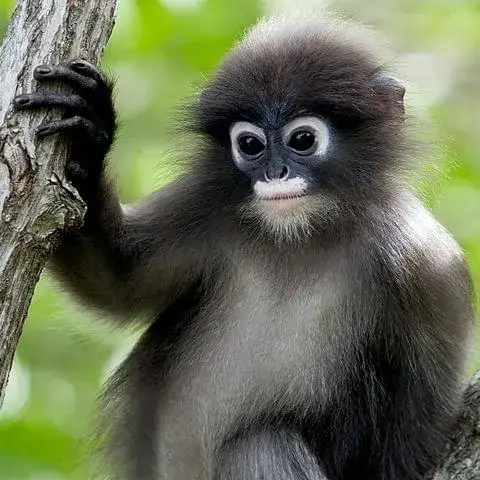
- Dusky langurs are the animal you are almost guaranteed to see, in the trees behind the beach on <strong>Koh Wua Ta Lap</strong>.
- Leopard cats, fishing cats and smooth-coated otters live in the park but are rarely seen by day visitors.
- About 50 bird species are recorded, and oriental pied hornbills are the ones you are most likely to spot or hear.
- Bryde's whales turn up in the Gulf of Thailand from time to time, seen from the boat rather than guaranteed.
- Do not feed any animal in the park: it is bad for them and it is against the rules rangers ask visitors to follow.
Somebody on the boat always asks the same question on the way over: will we actually see anything, or is this just a scenic cruise with a wildlife section in the brochure. The honest answer for ang thong wildlife is: yes, reliably, but mostly one species, and the rest is a matter of luck and quiet eyes.
Ang Thong is a national park first and a tour destination second, which is why the animals here are not performing for visitors. The dusky langurs near the headquarters come close because that is their patch of forest, not because anyone trained them. Everything else in this guide takes a bit more attention, or a bit more luck.
What animals live in Ang Thong National Marine Park?
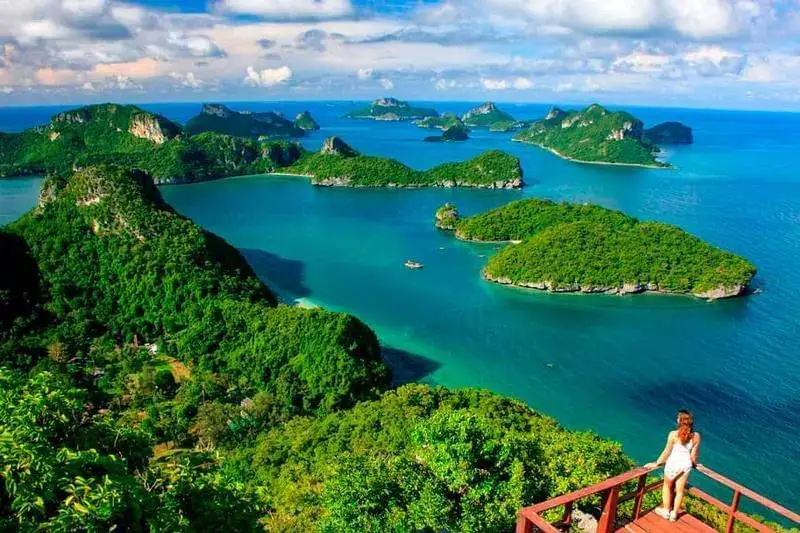
The park authorities record 16 mammal species, 14 reptile species, 5 amphibian species and around 50 bird species across the 42 islands. Most of this list lives on the larger, forested islands like Koh Wua Ta Lap and Koh Phaluai, where there is enough tree cover and fresh water to support them.
The mammal list includes dusky langurs, long-tailed macaques, leopard cats, fishing cats, wild boar and smooth-coated otters. Reptiles and amphibians exist too, but nobody comes to Ang Thong specifically to find a gecko, so this guide focuses on what you can realistically expect to notice on a day trip.
If you want the bigger picture of the park itself, the island layout and what each stop looks like, our main Ang Thong guide covers that ground; this article stays on the animals.
Where do you actually see dusky langurs?
Dusky langurs live in family groups of 4 to 30 around the park headquarters on Koh Wua Ta Lap, and this is where every tour sees them. They sit in the trees right behind the beach, close enough for a good photo with a normal phone camera.
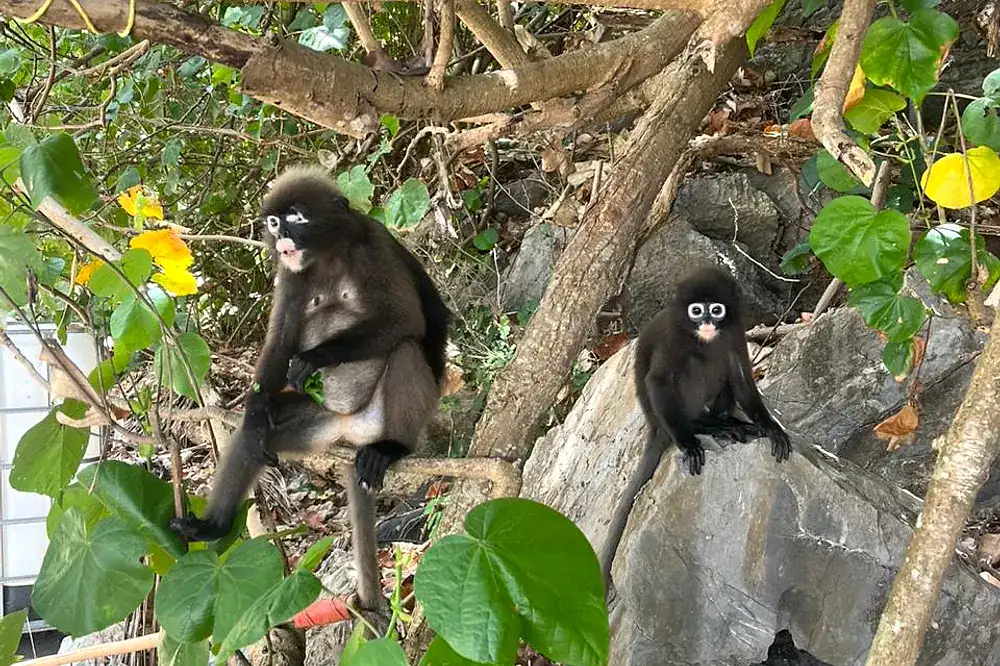
They are grey with a distinctive white ring around each eye, which is where the "spectacled" nickname some guides use comes from. Babies are born a bright golden orange and only turn grey after a few months, so if you see an orange one in the group, that is a recent arrival.
- They are most active and visible in the morning and late afternoon, resting through the hottest hours.
- They come down low in the trees near the beach but rarely onto the sand itself.
- Long-tailed macaques also live in the park and look similar from a distance, but they are bolder around food and bags, so keep an eye on your lunch if macaques are around.
Do not feed the langurs, even if they come close: human food makes them sick and makes them aggressive toward the next group of visitors.
What birds will I see or hear in Ang Thong?
The bird you are most likely to notice is the oriental pied hornbill, with its heavy curved bill and a loud whooshing wingbeat you often hear before you see the bird. They pair for life and spread seeds through the forest as they move between fruit trees, so they are genuinely useful to the islands, not just decorative.
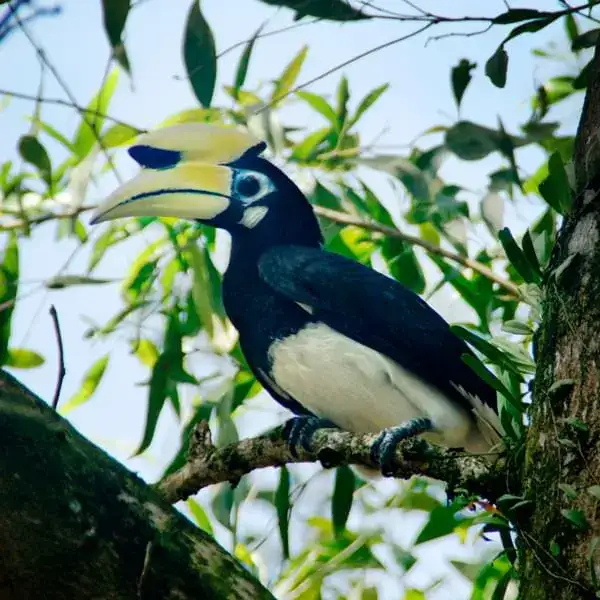
Around 50 bird species are recorded in the park in total, including white-bellied sea eagles circling over the cliffs and various kingfishers along the shorelines. Most of these take a trained eye and some patience, so do not expect a guide to point out every one on a four-stop day tour.
If birds are a real interest rather than a nice extra, the quietest time to look is early morning on Koh Wua Ta Lap, which usually means staying overnight at the park bungalows rather than visiting on a day tour, since the group boats arrive mid-morning once the forest has gone quiet.
Will I see a leopard cat, fishing cat or otter?
Honestly, probably not. Leopard cats, fishing cats and smooth-coated otters are all genuinely present in Ang Thong, but they are nocturnal or very shy, and a day tour moves through the islands at the wrong hours and in groups too large and noisy for them to show themselves.
These animals matter for the park's ecology and for its conservation status, which is part of why the annual closure exists. But if you came hoping to photograph a fishing cat, set that expectation aside and enjoy the langurs and birds instead, which are the animals the park actually delivers for visitors.
This is also one of the quieter arguments for a private boat: a smaller, quieter group moving at its own pace has a slightly better chance with shy wildlife than a full speedboat of 30 people, though there are still no guarantees.
Can you see whales near Ang Thong?
Bryde's whales are regular visitors to the Gulf of Thailand and are sometimes spotted from the boats on the crossing to the park, though not on every trip. They are large animals, 12 to 14 meters long and 16 to 25 tons, feeding on sardines and mackerel, usually visible only as a surfacing back or a blow of spray rather than a full breach.
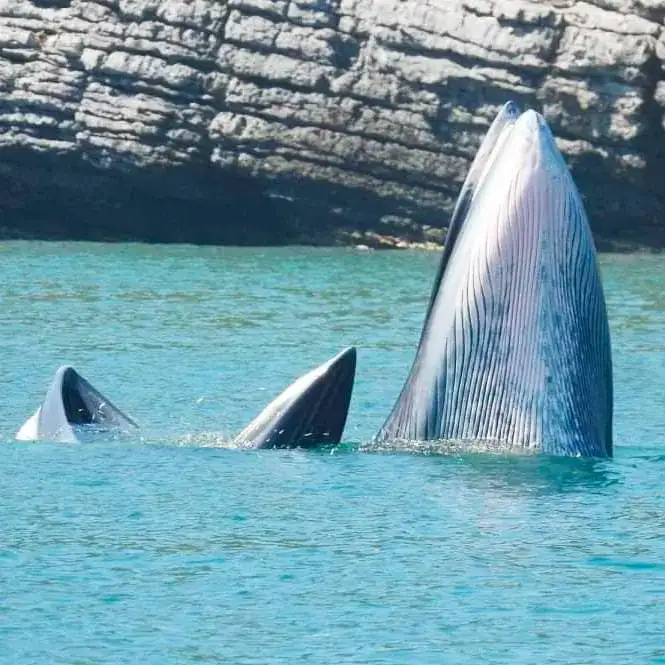
If your guide spots one, the captain will usually slow down for a look, but nobody can promise it will happen on your day. Treat a whale sighting the way you would treat good weather: wonderful if it happens, not something to plan the trip around.
What lives in the water around Ang Thong?
The marine life most visitors actually interact with is on the snorkeling stops, where parrotfish, sea urchins and rays are common over the shallow reefs near Koh Wao. Green turtles and the rarer hawksbill turtle also live in these coral gardens, though seeing one usually comes down to timing and a bit of luck.
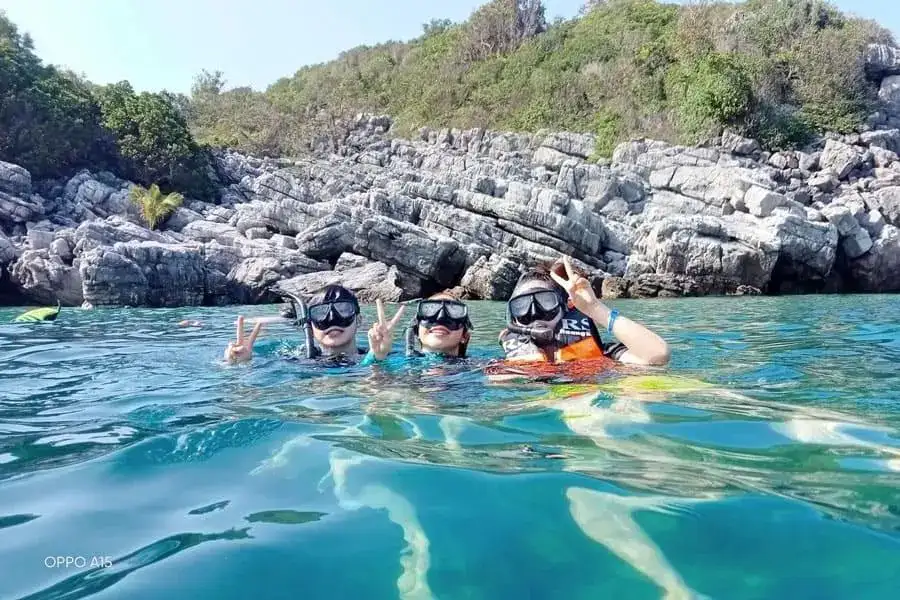
The coral itself recovers slowly, so please do not stand on it or feed the fish to get them closer for a photo: both habits damage a reef that already works hard to survive warm, busy waters. We cover the detail of what you will see underwater in a separate guide coming soon; for now, the main point is that the reef is shallow enough for complete beginners and the fish are not shy.
What is the Ang Thong lady's slipper orchid?
It is not an animal, but it comes up often enough in the "what lives here" conversation that it is worth a mention. The Ang Thong lady's slipper is a rare orchid found only on the limestone cliffs of the southern Gulf, white petalled with dark spots, and it is the unofficial plant symbol of the park.
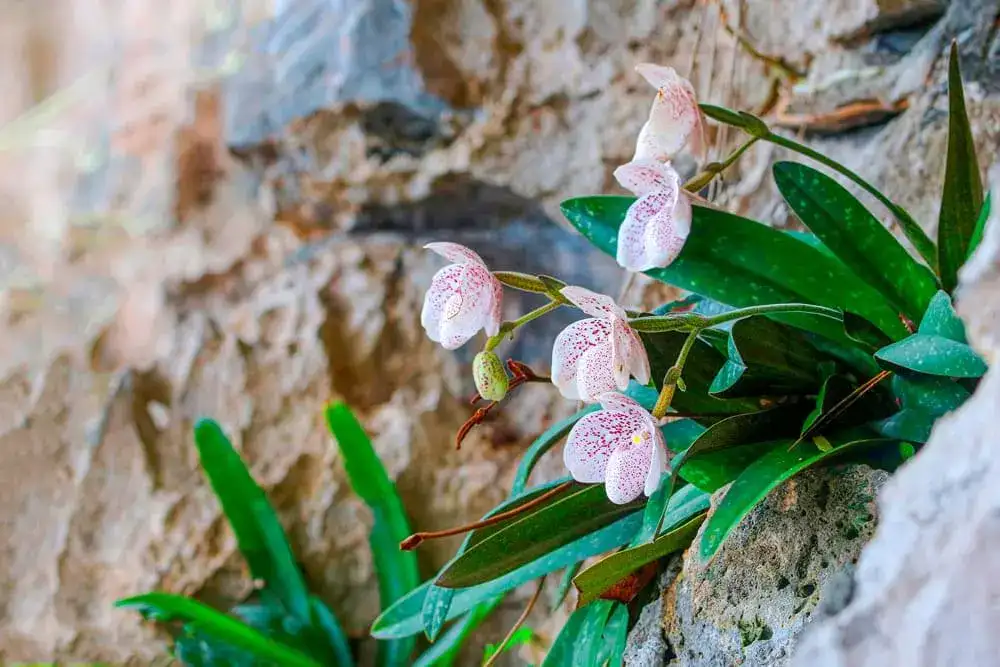
It flowers from April to August on the cliffs of Wua Ta Lap, Koh Phaluai, Mae Ko and Koh Sam Sao. Spotting one from a moving boat or a trail is genuinely a matter of chance, so do not build your whole day around it, but it is worth a glance at the cliff faces as you pass.
Which tour gives the best wildlife chances?
All the group tours stop at Koh Wua Ta Lap, so langurs are more or less guaranteed wherever you book. Beyond that, the differences come down to group size, pace and how much time you spend ashore versus on the water.
| Tour | Group size | Langurs | Snorkeling / reef life | Best for wildlife |
|---|---|---|---|---|
| Speedboat Tour | Shared speedboat | Yes, at Wua Ta Lap | Yes, at Koh Wao | Good all-rounder, daily departures |
| VIP Speedboat Tour | Max 16 | Yes | Yes, plus kayaking at Koh Sam Sao | Smaller group, calmer stops |
| Big Boat Tour | Large group | Yes | Basic gear included | Budget option, smoother ride |
| Red Baron Sailing Cruise | Up to 70 | Yes, at Wua Ta Lap | Yes, sheltered bay | Slow pace, good for birds on deck |
| Private Speedboat Charter | Your group, max 15 | Yes, on your schedule | Flexible stops |
The VIP speedboat and the private charter both move in smaller groups, which tends to mean quieter stops and a slightly better shot at spotting something beyond the usual langurs and hornbills. The regular speedboat and big boat are perfectly fine for wildlife too, since the headquarters stop and the reef are the same islands either way.
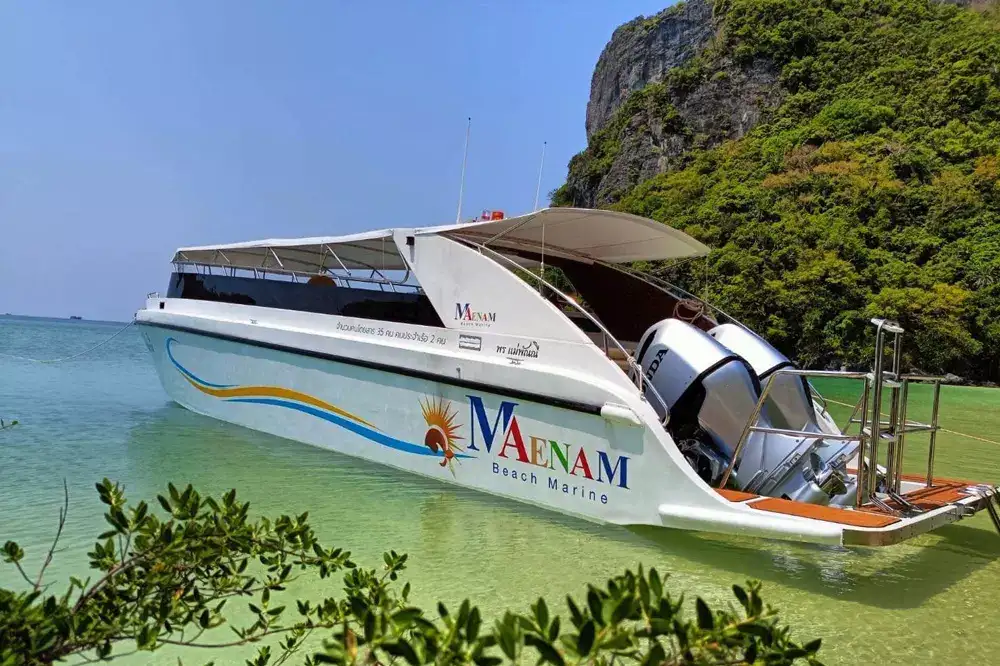
If you are weighing up the regular speedboat against the big boat on other grounds like price, comfort and time on the water, our dedicated comparison on speedboat or big boat goes into that in more detail.
Rules for behaving around the animals
The park rules are simple and mostly common sense, but they matter more than they sound. The langurs and macaques on Wua Ta Lap are used to people, which is exactly why feeding them is such a bad idea: it changes their behaviour permanently and makes them pushier with every group that comes after you.
- Never feed any animal in the park, however friendly it looks.
- Keep food and rubbish zipped away, especially around macaques.
- Do not touch or chase animals for a photo; let them come to you or move on.
- Keep a reasonable distance from nesting birds if you spot one on a cliff trail.
- Do not stand on coral or handle marine life while snorkeling.
None of this is hard to follow, and your guide will usually remind the group at the first stop. It is worth taking seriously anyway, since the animals here are the reason the islands feel the way they do, not a backdrop added for the tours.
Planning around the animals and the season
The park is usually closed every year from 1 November to 15 December to let the islands and their wildlife recover from the high season, and no tours run during that window. Outside the closure, January to September is generally the calmest stretch of sea and the easiest time to be out on deck with binoculars if whales or birds are your thing.
For the practical side of getting there, hotel pickup times and which pier each boat leaves from, our how to get there guide covers it. If you want to plan your whole day stop by stop, the islands overview on which islands you actually see is a useful companion to this one.
Questions and answers
What is the most common animal you see on an Ang Thong tour?
Dusky langurs, seen on almost every tour near the beach at the park headquarters on Koh Wua Ta Lap. They live in family groups and are active mostly in the cooler parts of the day.
Are there snakes in Ang Thong National Marine Park?
Reptiles are part of the park's recorded wildlife, but they are not something tours point out and visitors rarely encounter one on the usual trails and beaches. Wear proper shoes on the viewpoint trails regardless, more for the uneven rock than for snakes.
Can you see monkeys up close in Ang Thong?
Yes, dusky langurs and long-tailed macaques both come close to the beach area on Koh Wua Ta Lap. Keep a sensible distance and never offer them food, even if they approach you first.
Is it common to see whales on the boat trip to Ang Thong?
Bryde's whales are seen from time to time in the Gulf of Thailand on the crossing, but it is not a regular or guaranteed sighting. If the crew spots one, the captain may slow down briefly for a better look.
Why don't tours see leopard cats or fishing cats?
Both are nocturnal and naturally shy of people, and day tours move through the islands in daylight with groups that are too large and noisy for these animals to appear. They are part of the park's wildlife but not part of the realistic visitor experience.
Is snorkeling in Ang Thong good for seeing marine life?
Yes, the shallow reef near Koh Wao regularly has parrotfish, sea urchins and rays, with green and hawksbill turtles present in the coral gardens as well. Visibility is best from January to September when the sea is usually calmer.
Does feeding the animals in Ang Thong cause real harm?
Yes, feeding langurs, macaques or fish changes their natural behaviour and can make them sick or aggressive toward later visitors. It is one of the simplest rules in the park and one of the most important to actually follow.
Facts checked against our tour pages on 22 October 2026. Prices and days can change: your manager confirms them when you book.