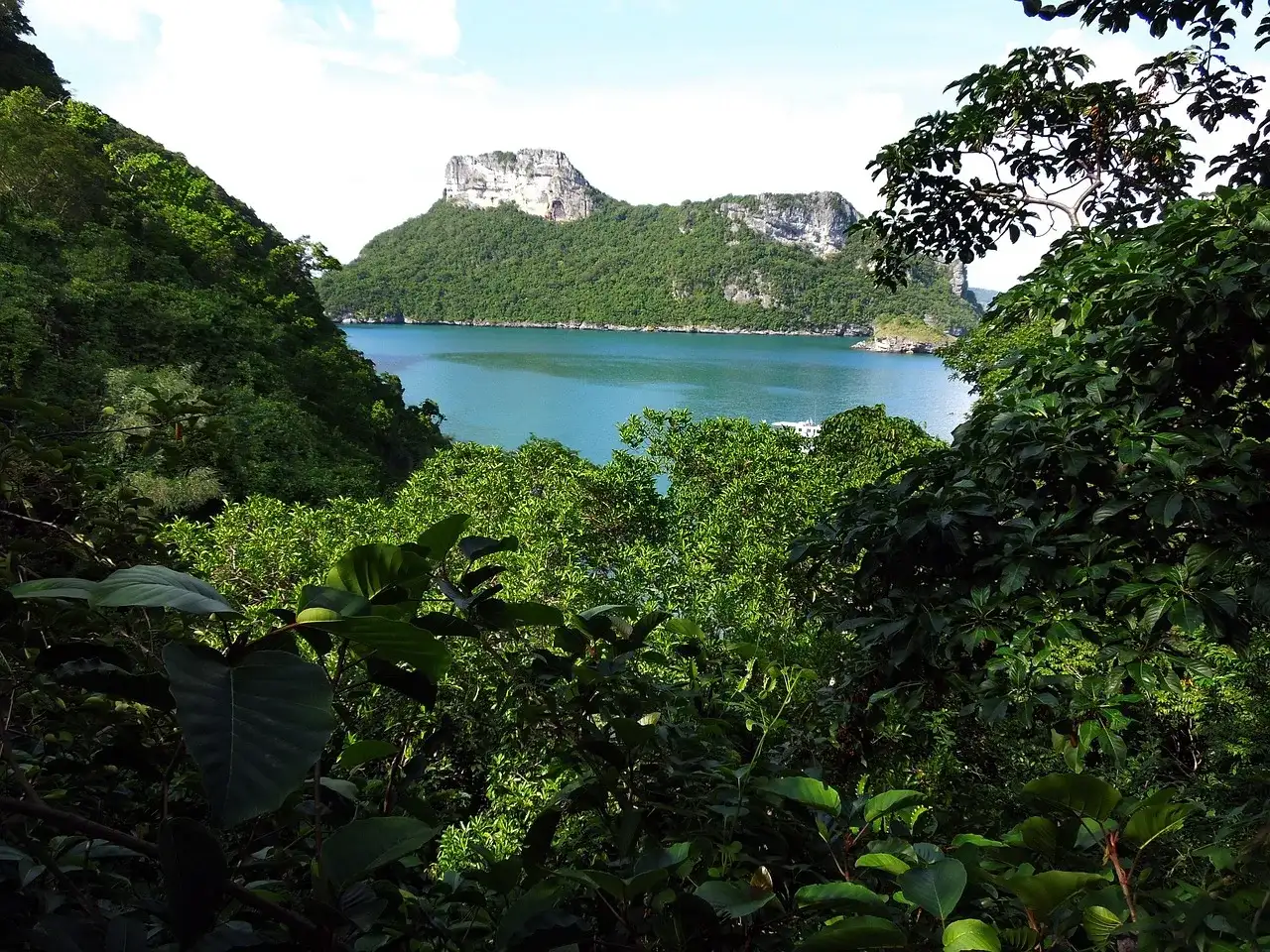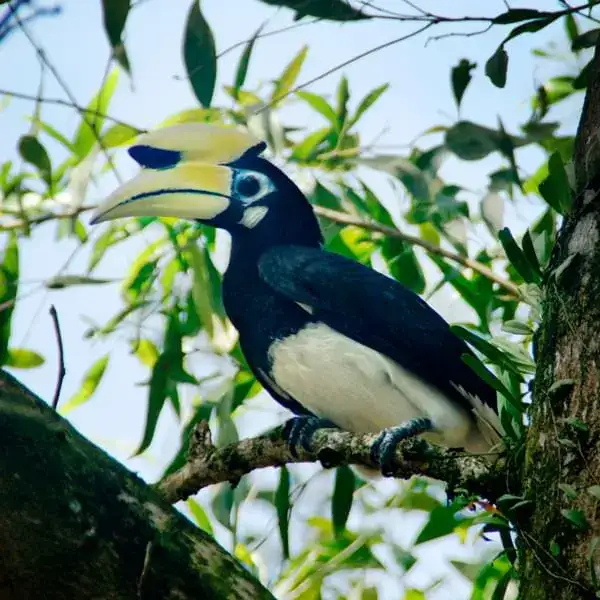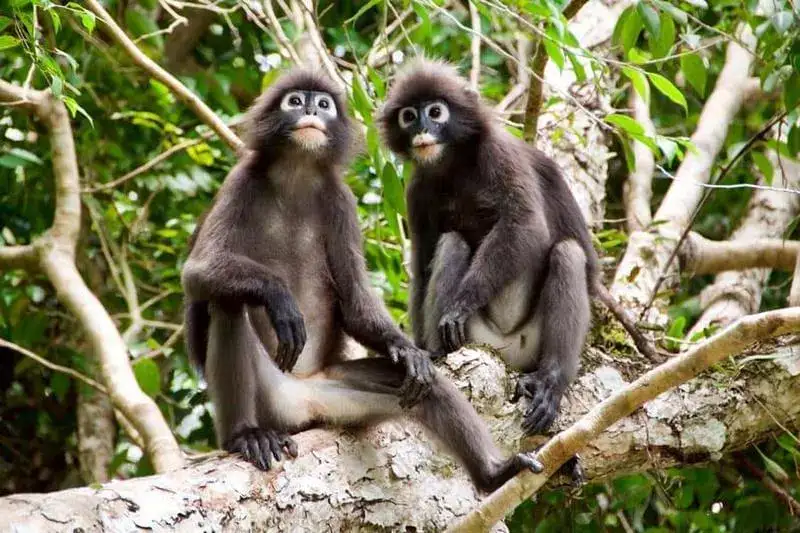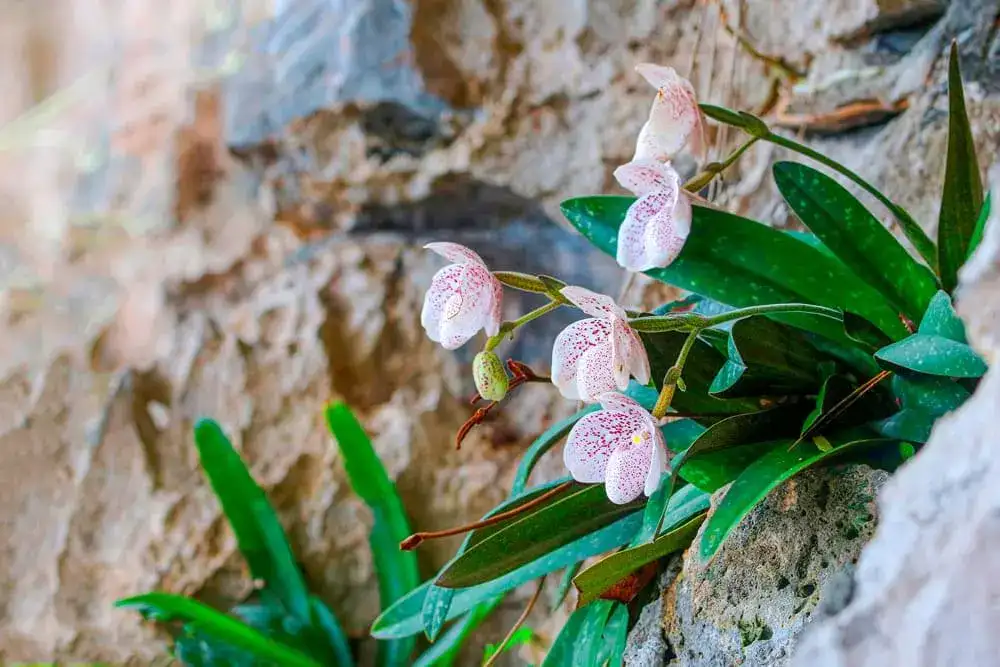
- The Ang Thong lady's slipper is a rare orchid of the limestone islands of the southern Gulf of Thailand, with white petals and dark dots.
- It flowers from April to August, which falls inside the January to September period when the sea is usually calm.
- In the park it grows on the cliffs of Wua Ta Lap, Phaluai, Mae Ko and Sam Sao, and no tour promises you a sighting.
- Taking plants from a Thai national park is forbidden, and a wild plant that is dug up rarely survives away from its limestone.
- The VIP speedboat tour is the only group tour that stops at all four islands, on Tuesday, Thursday and Saturday.
Halfway up the stairway on Mae Ko, everyone is looking at their feet, or ahead to the lake. Very few people look sideways at the bare limestone, which is exactly where the Ang Thong orchid lives. It is the symbol of the park, and most visitors go home without knowing it was there.
I like this plant because it is the opposite of the Emerald Lake: small, easy to miss and impossible to schedule. Here is what it is, when and where to look, and how much hope to have.
What is the Ang Thong orchid?
The Ang Thong orchid, or Ang Thong lady's slipper, is a rare orchid that grows on the limestone islands of the southern Gulf of Thailand. It has white petals with dark dots, and the park uses it as its symbol.
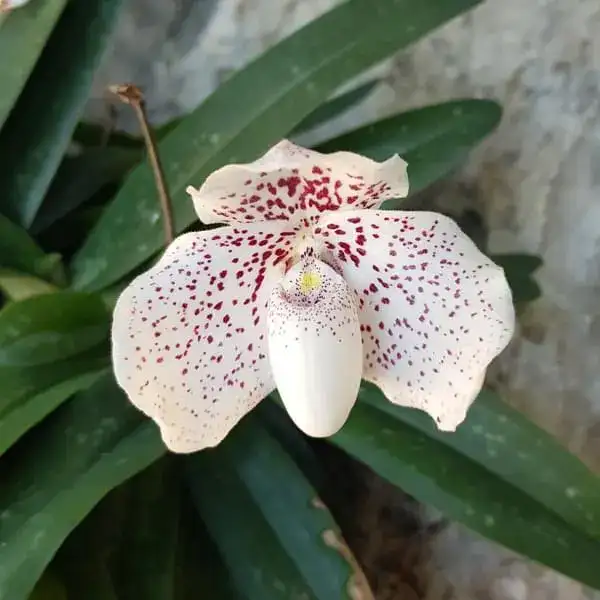
The "slipper" is the pouch at the front of the flower, a lip that has evolved into a small cup. Insects that climb in have to squeeze out past the parts of the flower that carry pollen, which is how the plant gets pollinated.
It belongs to the slipper orchids, the genus Paphiopedilum, and botanists have long discussed how the Ang Thong plants relate to their close relatives in the region. You may see different names in different books. For a day on the boat, that does not matter: white flower, dark dots, limestone.
It is not found only in this park, despite the name. It is a plant of the limestone islands of the southern Gulf, and the park is simply the place where most travellers will ever be near it. For the wider picture of what lives here, see the Ang Thong wildlife guide.
When does the lady's slipper flower?
It flowers from April to August. Outside those months you are looking for leaves on a rock, and few people would notice them.
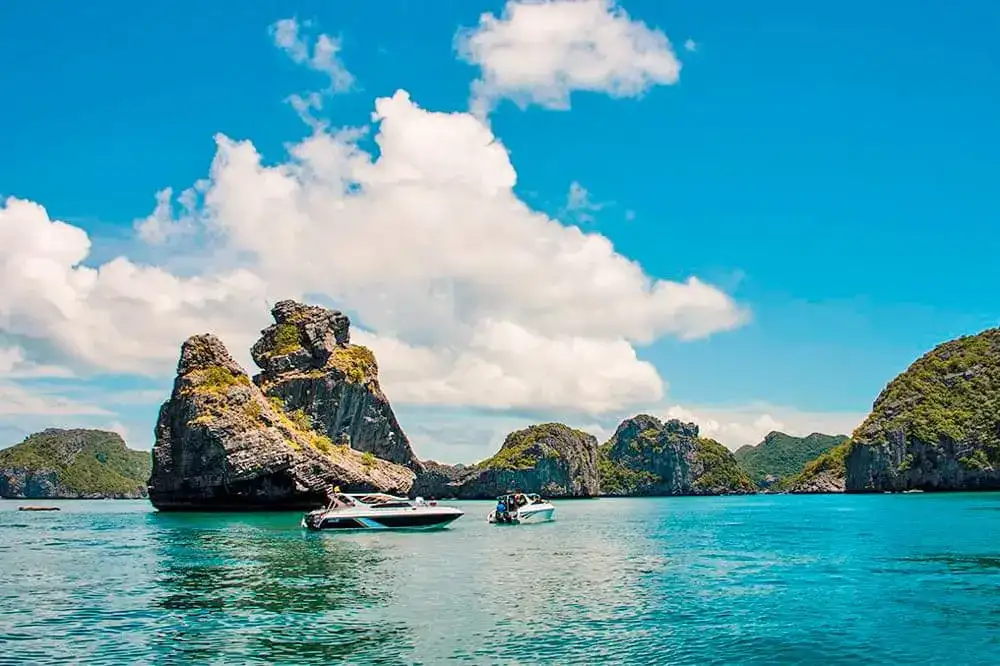
That timing works well for visitors, since it falls within the calmer part of the year. The table shows how the flowering lines up with the sea and the park. I treat the flowering as a bonus, not as a reason to choose your month.
| Period | Orchid | Sea and park |
|---|---|---|
| January to March | Not in flower | Usually calm, tours run |
| April to August | In flower | Usually calm, tours run |
| September | Flowering season over | Usually calm, tours run |
| October | Not in flower | Rainy season, rougher sea, the captain may change or cancel |
| 1 November to 15 December | Not in flower | Park usually closed, no tours |
| Late December | Not in flower | Rainy season, rougher sea |
Wild plants do not read calendars, so a single plant may flower earlier or later than its neighbours, and some may not flower at all in a given year. The exact closure dates are announced each year too, so check them if you are looking at late December. More on the seasons is in the month-by-month guide to Ang Thong.
Where does it grow in the park?
In Ang Thong it grows on the limestone cliffs of four islands: Wua Ta Lap, Phaluai, Mae Ko and Sam Sao. It lives on the rock itself, not in the beach forest and not on the sand.
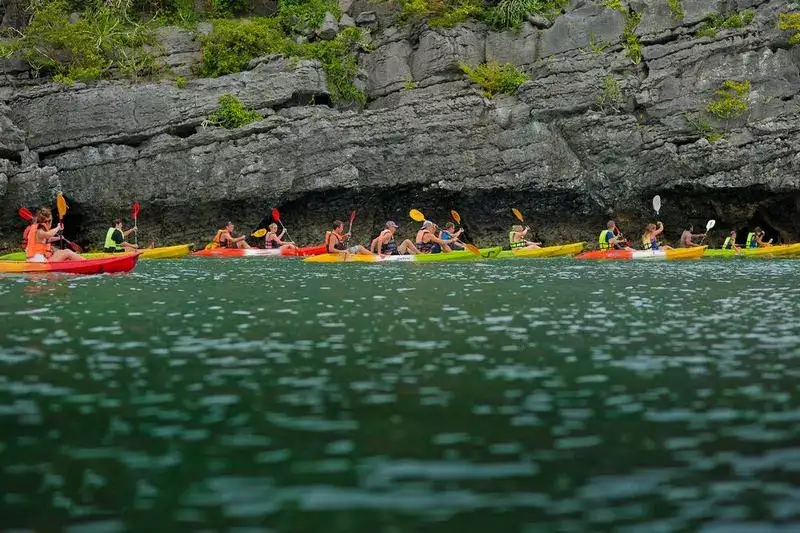
Limestone looks like a terrible place for a plant. But slipper orchids of this kind settle into cracks and ledges, where a little leaf litter gathers, and they take what they need from that thin layer. Dappled light and sea air seem to suit them, while full-on human attention does not.
The table shows how each island fits into the tours, and how close you get to the right kind of rock on each one.
| Island | Which tours go there | How you meet the rock |
|---|---|---|
| Koh Wua Ta Lap | Speedboat, VIP, big boat, Red Baron | On the steep trail of about 500 metres to the top viewpoint |
| Koh Mae Ko | Speedboat, VIP, big boat, Red Baron | On the stairway to the Emerald Lake, and from a kayak on the big boat's kayak option |
| Koh Sam Sao | VIP stops here; other tours usually see it from the boat | From a kayak along the cliffs, the closest slow view of limestone you get |
| Koh Phaluai | VIP and private tours | A lunch stop, so not much chance to go looking |
Private charters plan their own route, and Mae Ko, Wua Ta Lap and Phaluai are part of the usual day. The guide to kayaking in Ang Thong shows where each tour paddles.
Will you actually see it on a tour?
Probably not, and I would rather tell you that now. No tour stops for the orchid, and nobody can promise you a flower, even in the right months.
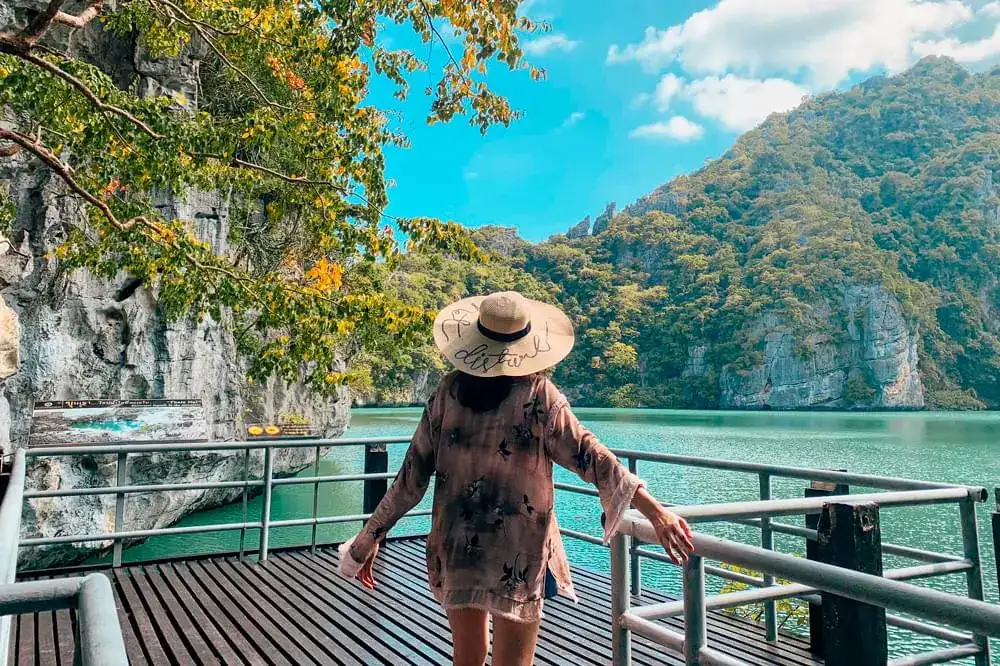
The plants are small, rare and often up on rock you cannot reach. The stops are also built around the lake, the viewpoint, the reef and lunch, so you will be moving with a group, in the heat, on a timetable.
That does not make looking pointless. It just changes what counts as a good result: a pause on the trail, a scan of the ledges, and perhaps one white dot on a grey wall. If the guide on the day knows where a plant has been seen, ask. Guides differ, and some will happily point one out.
Do not book a trip to Ang Thong only for this flower. Go for the islands, the lake and the water, and keep your eyes open. If your heart is set on photographing a slipper orchid in bloom, an orchid show or a botanical garden will serve you much better.
Why is picking the Ang Thong orchid forbidden?
Because this is a national park, and taking plants from a Thai national park is against the law. Leave every plant where it is, even a single fallen flower or a loose leaf.
There is also a good practical reason behind the rule. Slipper orchids grow slowly and can take years to reach flowering size, so one plant taken from a cliff is a long loss for a small population.
Wild slipper orchids around Asia have suffered badly from collectors, and international trade in them is tightly restricted under the CITES convention. A plant dug out of a limestone crack also rarely survives, because it has been pulled away from the conditions that kept it alive.
- Do not pick the flower or touch the plant, even for a photo.
- Do not climb off the trail or up a cliff to get closer.
- Do not buy a plant described as wild-collected at a market, on Koh Samui or anywhere else.
- Do not share a precise location online if you find a plant. A photo of the flower is enough.
The wider list of what you can and cannot do is in the article on Ang Thong rules for visitors.
Which tour gives you the best chance?
The VIP speedboat, if you care about this. It is the only group tour that stops at all four orchid islands, and it has no more than 16 guests, which makes it easier to stop and look.
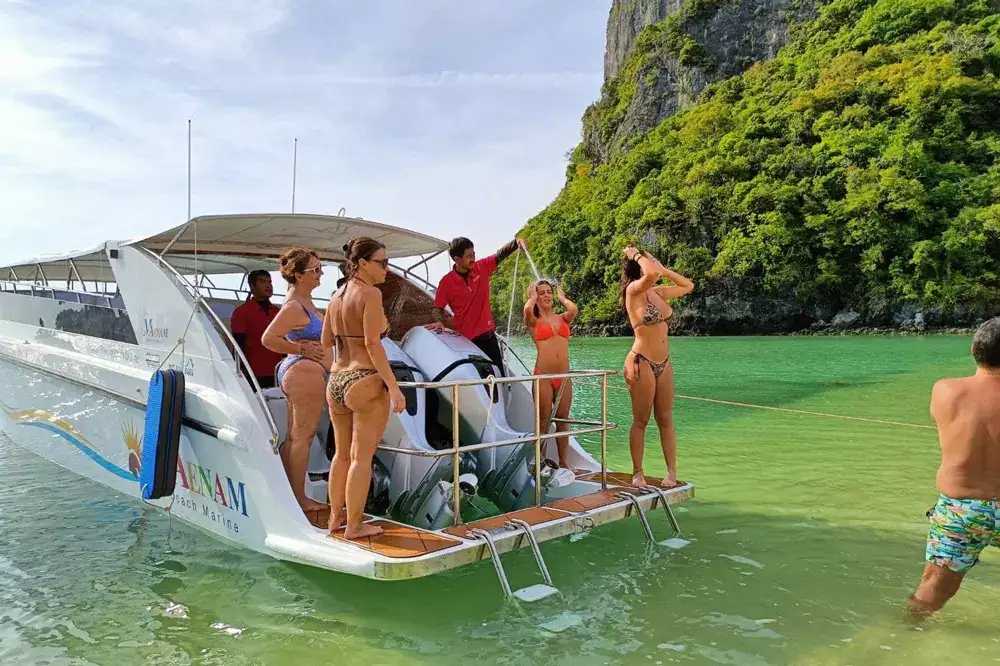
It costs ฿3890 per adult with the park fee included and runs on Tuesday, Thursday and Saturday, and the VIP speedboat tour page has the full route. Would I pay that for the orchid alone? No. I would pay it for the small group, and count the orchid as an extra reason.
The other tours can still give you time near the right rock. Here is how I would think about them:
- Big boat, from ฿1100 per adult: Wua Ta Lap is the first stop, from about 09:50, with lunch on board at 12:30. That is a generous morning if you want to walk the trail slowly. The kayak option (฿1500 per adult) takes you along the coast of Mae Ko.
- Speedboat, ฿1890 per adult: a good all-round day, with Mae Ko at about 11:00 and Wua Ta Lap from about 14:00. The heat on that afternoon trail is real.
- Red Baron, ฿3700 per adult: a lovely slow sailing day, but you reach Wua Ta Lap at about 15:30. Pick it for the boat, not the plants.
- Private charter, ฿39,000 per boat for up to 6 guests: you set the pace, so you can stay longer on the islands. Kayaks are not included, so that closer view from the water is not part of the deal.
The VIP suits anyone who wants all four islands in a small group, the big boat suits budget travellers with time for a slow climb, and the speedboat suits most people who just want a full day out.
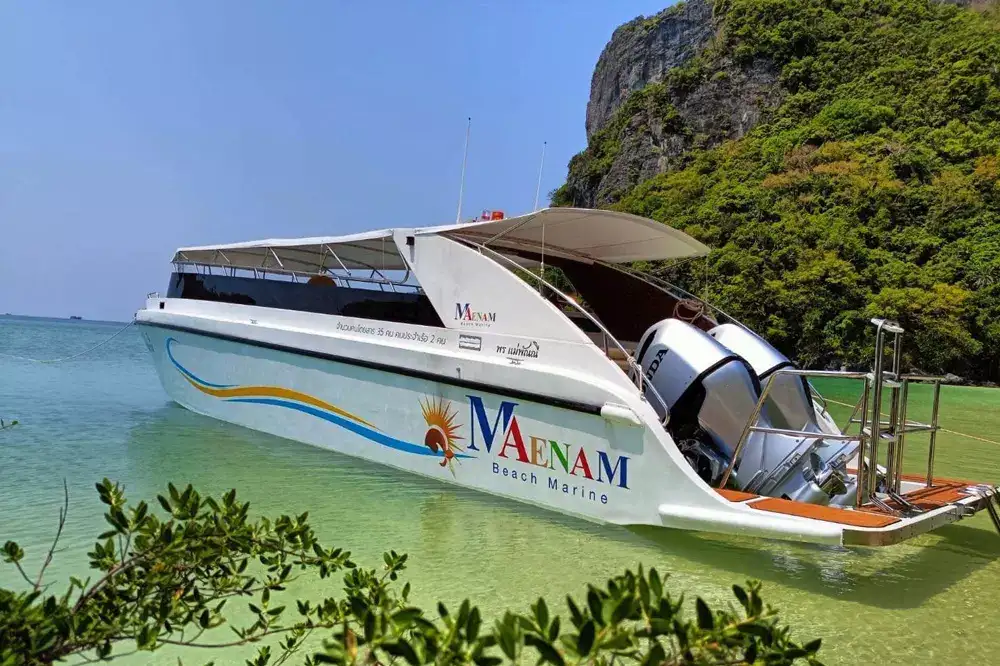
- Days
- Tue, Thu, Sat
- Time
- 07:00-17:30
- Boat
- Small group, max 16
- Park fee
- Included
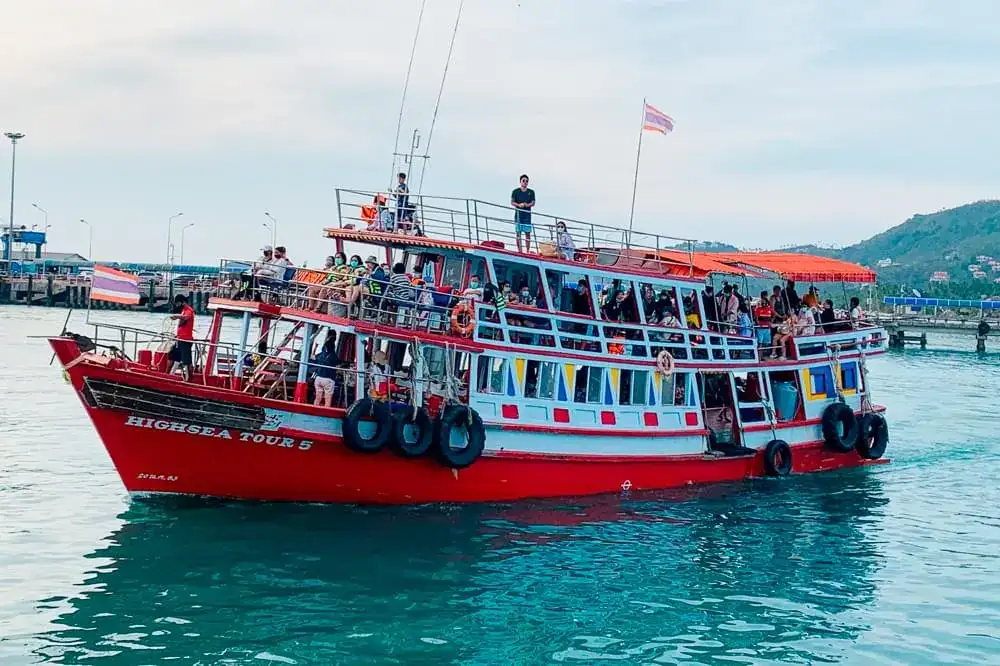
- Days
- Daily
- Time
- 07:30-17:00
- Boat
- Large tourist boat
- Park fee
- ฿300 extra
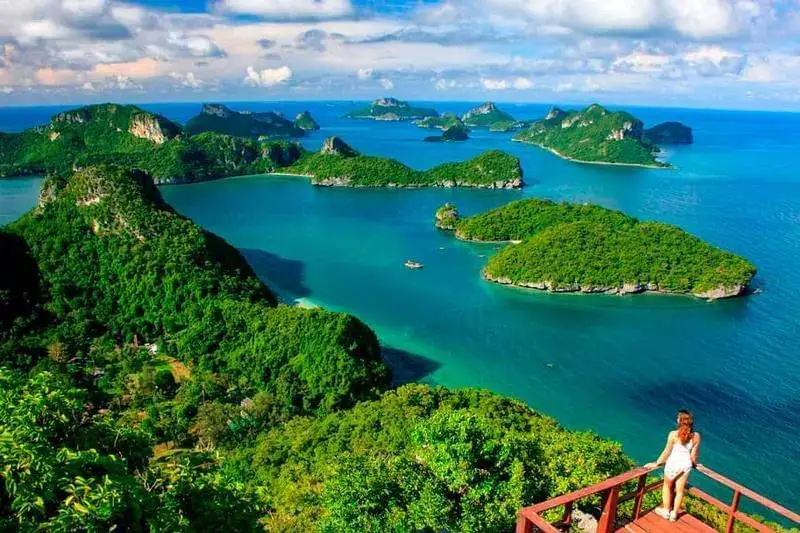
- Days
- Daily
- Time
- 07:40-16:30
- Boat
- Shared speedboat
- Park fee
- ฿300 extra
How to look for it on the day
Keep it simple, and keep your feet on the path. Go between April and August, and look at the rock beside the trail, not the view at the end of it.
- Bring small binoculars or a phone with a good zoom. The plants are often out of reach.
- Wear shoes with grip. Both climbs are steep, and the Koh Wua Ta Lap guide explains the trail.
- Stop only where you are not blocking the people behind you on the stairs.
- Take water and go at your own pace, because the midday heat is the hard part.
- Remember the kayaking age limit if you have children: from 5 years old, with no exceptions.
And if you see nothing, you have not missed the point of the day. You will still have stood above the Emerald Lake and looked out over 42 islands, with the orchid somewhere on the cliffs around you.
Questions and answers
What colour is the Ang Thong lady's slipper?
It has white petals with dark dots. The pouch at the front is what makes it look like a slipper. Colours and markings can vary a little from plant to plant, as they do in most wild orchids.
Does the orchid grow anywhere else in Thailand?
Yes. It is a plant of the limestone islands of the southern Gulf of Thailand, not only of this park. Ang Thong is simply where most travellers have a chance of being near it.
Can I see the orchid if I visit in January?
You are very unlikely to see it in flower then, since it flowers from April to August. The plant is still on the cliffs, but the leaves are hard to pick out from a distance. January is still a good month for the sea and the islands.
Is the orchid on the Emerald Lake stairway?
Mae Ko is one of the islands where it grows, but no one can promise that you will see a plant from the stairway. It grows on the cliffs, often out of reach. Look at the rock faces beside you as you climb, and ask the guide on the day.
Can I go to Ang Thong in November to look for it?
No. The park is usually closed every year from 1 November to 15 December, and no tours run during that time. It is also well outside the flowering months, so April to August is the time to plan for.
Can I buy an Ang Thong orchid as a souvenir?
I would not. Wild-collected plants should stay on their cliffs, and taking any orchid across a border usually needs permits, so check the rules before you buy. A good photo is a better souvenir, and it causes no harm.
Do I pay extra to see the orchid?
No. There is no separate fee for it. The national park fee of ฿300 per adult and ฿150 per child covers the park, and it is already included in the VIP speedboat and Red Baron prices.
Facts checked against our tour pages on 24 November 2026. Prices and days can change: your manager confirms them when you book.