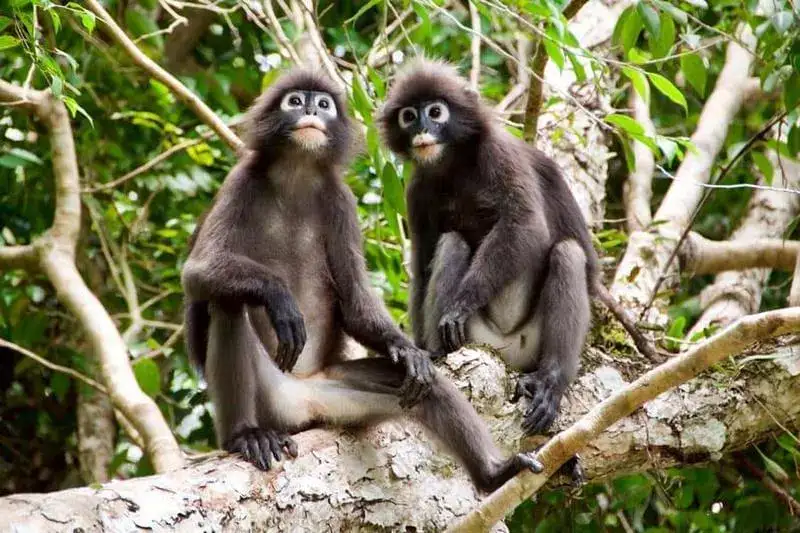
- Dusky langurs live in family groups of 4 to 30 in the trees behind the headquarters beach on Koh Wua Ta Lap.
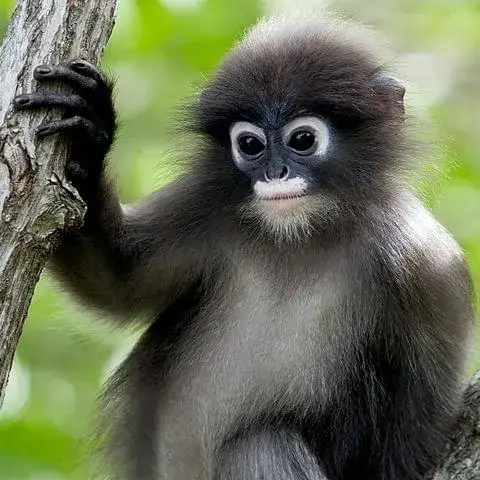
- They are dark grey with white rings around the eyes, while their babies are born a bright golden orange.
- The big boat tour lands on Wua Ta Lap first, from about 09:50, which is the best timing of the group tours for langur watching.
- Every group tour stops at Wua Ta Lap, but the speedboat tour arrives in the early afternoon, around 14:00.
- Feeding the langurs is not allowed: watch from a calm distance and keep food in your bag.
You come down the last steps of the viewpoint trail on Wua Ta Lap, sweaty and happy, and someone near the beach kiosk points up into a tree. Four grey faces with big white spectacles are looking back at you, and one of them is holding a baby the colour of a ripe mango.
That is the moment most people remember about the dusky langur in Ang Thong. This guide explains where they live, when you have the best chance, and how to watch them properly.
What is a dusky langur?
The dusky langur, also called the dusky leaf monkey or spectacled langur, is a slim, long-tailed monkey that lives in the forests of southern Thailand and the Malay Peninsula. In Ang Thong it is the park's best-known resident, and the one animal you are likely to see on almost any visit.
It is not the cheeky macaque that grabs bags at temples. Langurs are calm, shy leaf eaters that spend most of their lives in the trees, moving slowly between branches and sitting still for long stretches.
The park records 16 mammal species in total, including long-tailed macaques, leopard cats, fishing cats, wild boar and smooth-coated otters. Most of those are rarely seen by day visitors. The langurs are the exception, because they live right next to the busiest beach in the park.
For the full picture of what else lives on the islands and in the sea around them, read our Ang Thong wildlife guide with hornbills, otters and whales.
How do you recognise a dusky langur?
Look for dark grey fur, a long tail and white rings around the eyes, which give them the "spectacled" name. The mouth area is often pale too, so the face looks like it is wearing glasses and a little white beard.
Seen from below, the body can look almost black against the sky. The tail hangs down straight from the branch, much longer than the body, and it is often the first thing you notice.
- Colour: dark grey to brownish grey, lighter on the belly.
- Face: white or pale rings around the eyes, pale lips.
- Tail: long and thin, hanging below the branch.
- Behaviour: slow, quiet, often sitting together in a group.
- Babies: bright golden orange, impossible to miss.
Long-tailed macaques also live in the park, so it helps to know the difference. Macaques are brownish, have no white eye rings and are much bolder around people and food.
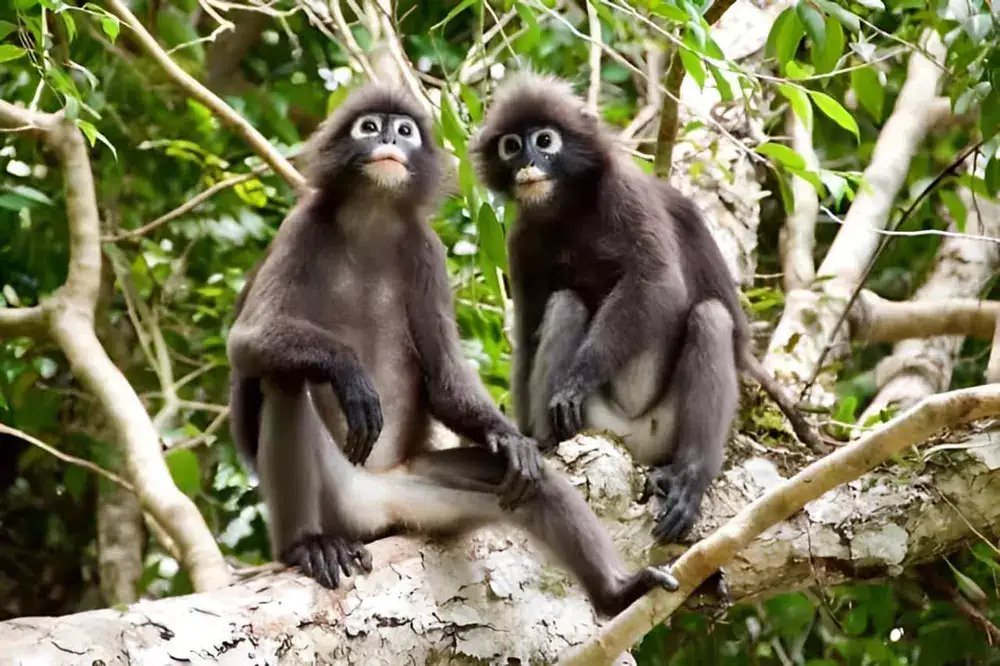
Why are dusky langur babies orange?
Dusky langur babies are born golden orange, and the colour fades to the adult grey as they grow, over their first months of life. It is one of the most photographed sights on Wua Ta Lap.
Scientists think the bright colour helps the group keep track of the youngest members and encourages other females to help with carrying and care. Whatever the reason, it works on visitors too: the moment someone spots an orange bundle in the tree, the whole beach goes quiet and every phone comes out.
You will usually see the baby clinging to its mother's belly, or sometimes being passed to another female in the group. If you see one, stay where you are and keep your voice down. A nervous mother will simply climb higher and you lose the view.
Tip from the beach: the orange baby is much easier to spot than the grey adults. Look for a patch of orange among the leaves, and the rest of the family will be right there.
Where to see the dusky langur in Ang Thong
The best place is the trees behind the headquarters beach on Koh Wua Ta Lap. Families of 4 to 30 langurs live around the park headquarters, and they often come down close to the beach, the kiosk and the paths.
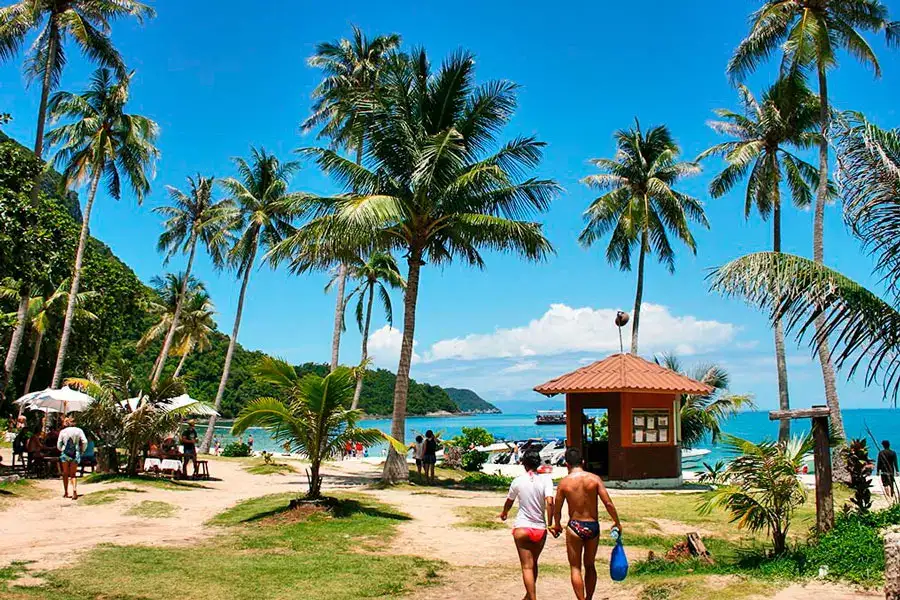
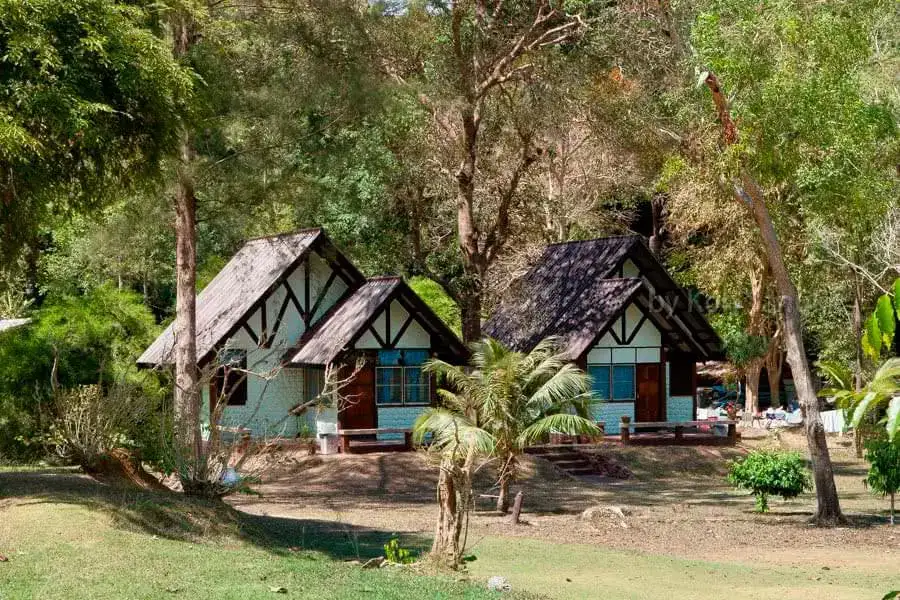
Wua Ta Lap, the "sleeping cow", is the second largest island in the park and its headquarters, with a ranger station, a restaurant, bungalows and a campsite. Apart from the fishing village on Koh Phaluai, it is the only island where people live, and those people are park staff.
The forest edge right behind the sand is where most sightings happen. The langurs move between the tall trees around the buildings and sometimes sit on low branches near the paths. The page on Koh Wua Ta Lap, the headquarters island shows the layout of the beach, the trail and the cave.
You can see langurs elsewhere in the park, but on other islands you are usually on a boat or a short stop and they are far away in the forest. If langurs are the reason you are going, plan your day around Wua Ta Lap.
Best time of day to see the langurs
Earlier in the day is better. Like most leaf monkeys, dusky langurs tend to be most active in the morning and later in the afternoon, and rest quietly in the shade during the hottest hours.
That matters because each tour reaches Wua Ta Lap at a different time. Here is when the group tours stop there, according to their schedules:
| Tour | When it stops at Wua Ta Lap | Price per adult | Langur chances |
|---|---|---|---|
| Big Boat Tour | First island, from about 09:50 | ฿1100 (with kayaks ฿1500) | Best: morning, longest stop |
| VIP Speedboat Tour | Second stop of the morning, after the Emerald Lake | ฿3890, park fee included | Good: morning visit |
| Speedboat Tour | Last stop, from about 14:00, boat leaves at 15:30 | ฿1890 | Fair: early afternoon heat |
| Red Baron Sailing Cruise | Viewpoint in the afternoon, at about 15:30 | ฿3700, park fee included | Fair: late afternoon, short stop |
If langurs are high on your list, the big boat tour from Nathon Pier is my pick. It lands on Wua Ta Lap first, while the island is still fresh, and the programme lists langurs and hornbills by name for that stop.
On the speedboat you still have a good chance, as the langurs live there all day. You just need to look a little harder, because at 14:00 they are often resting high in the shade rather than moving around.
Can you feed the dusky langurs?
No. Please do not feed the langurs, and do not feed the fish on the reefs either. This is the park's request, and guides will remind you on the beach.
There is a good reason behind it. Langurs are specialist leaf eaters with a complex stomach that ferments leaves, a bit like a cow. Bread, fruit from your lunch box, crisps or sweets can upset that system badly and make them ill.
Feeding also changes behaviour. Animals that learn to expect food from people start approaching boats and bags, and that is how monkey problems begin in many places. The langurs of Wua Ta Lap are still relaxed and gentle, and everyone wants to keep it that way.
- Keep food and drinks in your bag while you are near the trees.
- Do not try to touch a langur, even when one sits low and looks calm.
- Stay a few steps back from mothers with babies.
- No shouting, waving or throwing things to make them move for a photo.
- Pick up your rubbish: plastic is dangerous for curious animals.
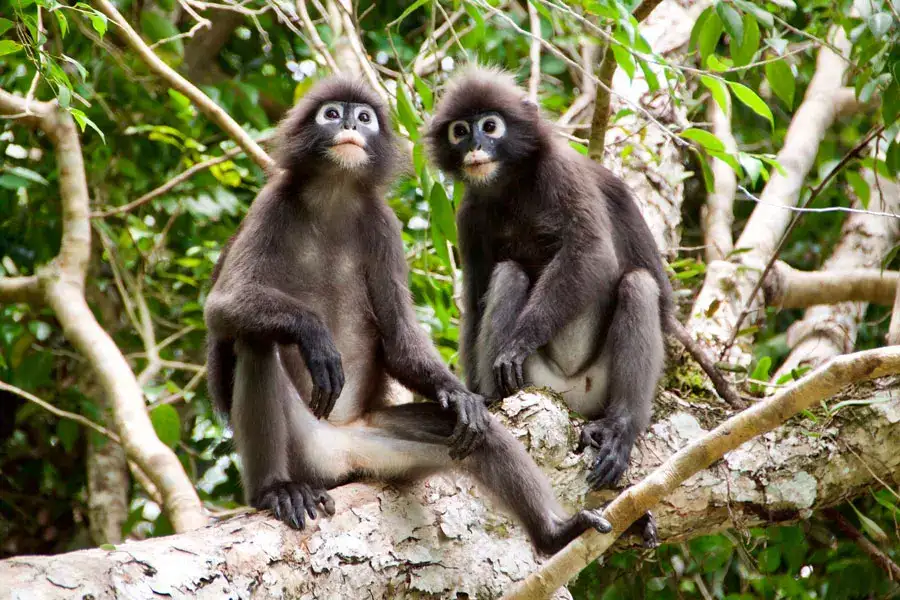
Langurs or the viewpoint: how to plan your stop
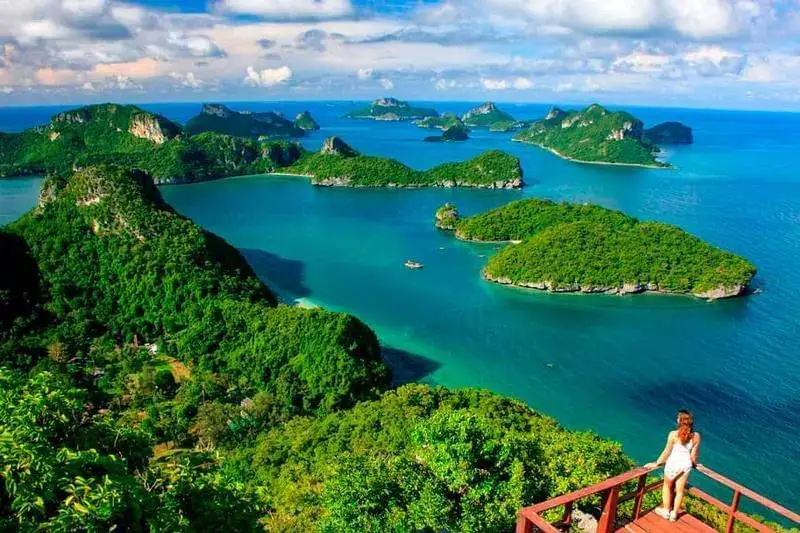
On most tours you have to choose: the steep trail of about 500 meters to the top viewpoint, or time on the beach with the langurs and the Bua Bok cave. The climb is optional, and many people do not have the energy for both in the heat.
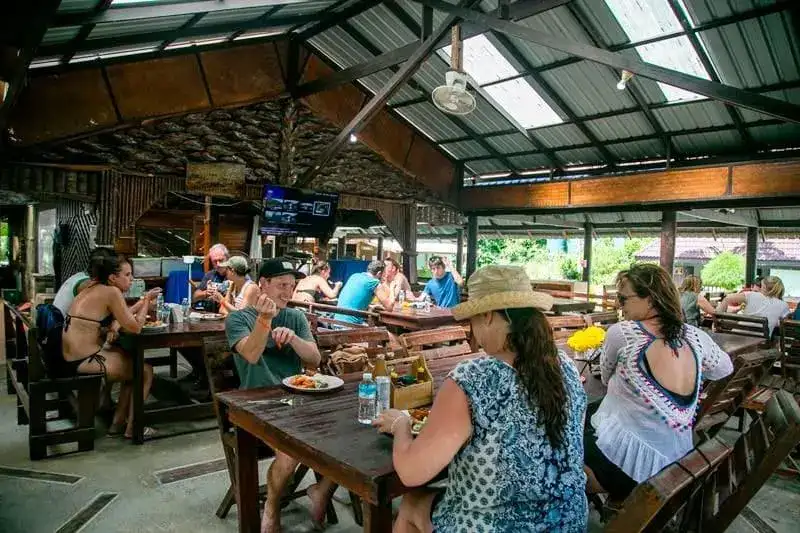
My honest advice: if you love animals, give the trees behind the beach your full attention first. You can see the archipelago view in hundreds of photos, but a langur family at ten metres is something you only get here.
If you do climb, keep your eyes open on the way. Langurs sometimes sit in the trees along the lower part of the trail, and hornbills are often heard in the forest around the headquarters. For an honest picture of the climb, see how hard the Wua Ta Lap viewpoint hike really is.
Families with small children usually do best on the beach. The kids can swim, the adults can watch the trees, and nobody gets stuck halfway up a hot, rocky trail.
Which tour should you book for the langurs?
For langur watching, the big boat tour, from ฿1100 per adult, gives the best timing for the least money. It is also the smoothest ride, which helps if anyone in your group gets seasick.
The speedboat suits people who want more islands in one day, with snorkeling, the Emerald Lake, lunch and kayaks on Tamarin Beach before the last stop at Wua Ta Lap. The VIP speedboat suits small groups who want a morning visit and everything included. The speedboat tour at ฿1890 is the most popular choice overall, so do not skip it just for the langurs.
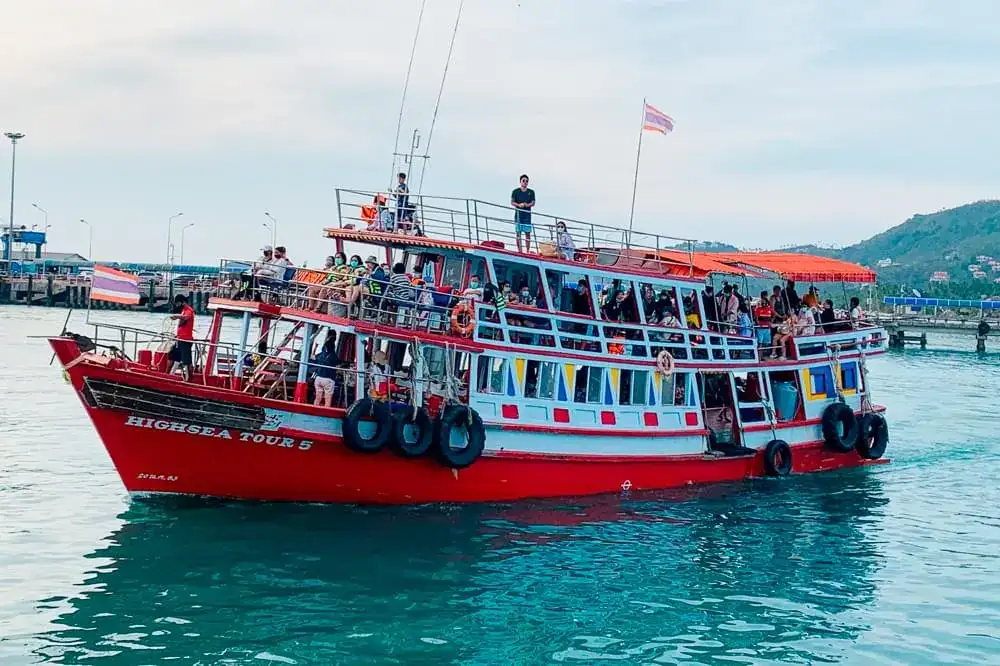
Remember that the national park fee of ฿300 per adult and ฿150 per child is not included on the big boat or the speedboat. Bring cash for it. On the VIP tour and the Red Baron it is already in the price.
Practical tips for your langur day
A few small things make a big difference on the beach at Wua Ta Lap.
- Look up early. Start scanning the trees as soon as you step off the boat, before the crowd spreads out.
- Bring a zoom. Even a phone with 2x or 3x helps, because the best views are often a few branches up.
- Move slowly. Langurs ignore calm people and climb away from noisy ones.
- Check the season. The park is usually closed from 1 November to 15 December, and October and late December can bring rough sea and changed routes.
- Ask the guide. They see the langurs almost every day and usually know which trees the family is using that week.
If you are travelling near the end of the year, read what the November to December closure means for your plans before you book.
Questions and answers
Are dusky langurs dangerous?
Dusky langurs are shy, calm leaf eaters and are not known for grabbing bags or chasing people. Still, they are wild animals, so do not touch them, keep a few steps back and keep food out of sight. If one comes close, simply stay still and let it move on.
Is it guaranteed to see langurs in Ang Thong?
No sighting of wild animals is guaranteed. That said, the langur families live around the headquarters on Wua Ta Lap all year, so most visitors who spend time near the beach trees see at least a few. Your chances are better in the morning and when you look carefully along the forest edge.
What do dusky langurs eat?
They mainly eat leaves, plus shoots, flowers and some fruit and seeds. Their stomach is built to ferment leaves, which is why human food like bread or snacks is bad for them. That is one of the reasons the park asks visitors not to feed them.
What is the difference between a langur and a macaque?
Dusky langurs are dark grey with white rings around the eyes, a long thin tail and calm behaviour. Long-tailed macaques, which also live in the park, are brownish with no white eye rings and are far bolder around people and food. On Wua Ta Lap beach the langurs are the ones you usually see.
Can I see langurs if I stay overnight in the park?
Koh Wua Ta Lap has park bungalows and a campsite run by the national park, right next to the langurs' trees. Day tours from Koh Samui do not include an overnight stay, so you would need to arrange it separately. Staying the night gives you the quiet early morning when the day boats have not arrived yet.
Can children get close to the langurs?
Children can watch them from the beach and the paths, often from quite close, but nobody should try to touch or feed them. Stay with young kids near the trees and explain the rule before you land. Most children are thrilled just to spot the orange babies.
What is the best month to see the langurs?
The langurs live around Wua Ta Lap all year, so the month matters less than getting there safely. January to September usually brings the calmest sea and the most reliable tours. The park is usually closed from 1 November to 15 December, and no tours run then.
Facts checked against our tour pages on 10 November 2026. Prices and days can change: your manager confirms them when you book.