- The best mangroves in Ang Thong line the shores of Koh Phaluai, the largest island in the park, and young mangroves grow elsewhere in the archipelago.
- Mangroves shelter young fish and crabs, trap silt before it reaches the coral and help shield the shore from waves.
- No group tour runs a dedicated mangrove stop, so treat them as a bonus rather than the reason for your trip.
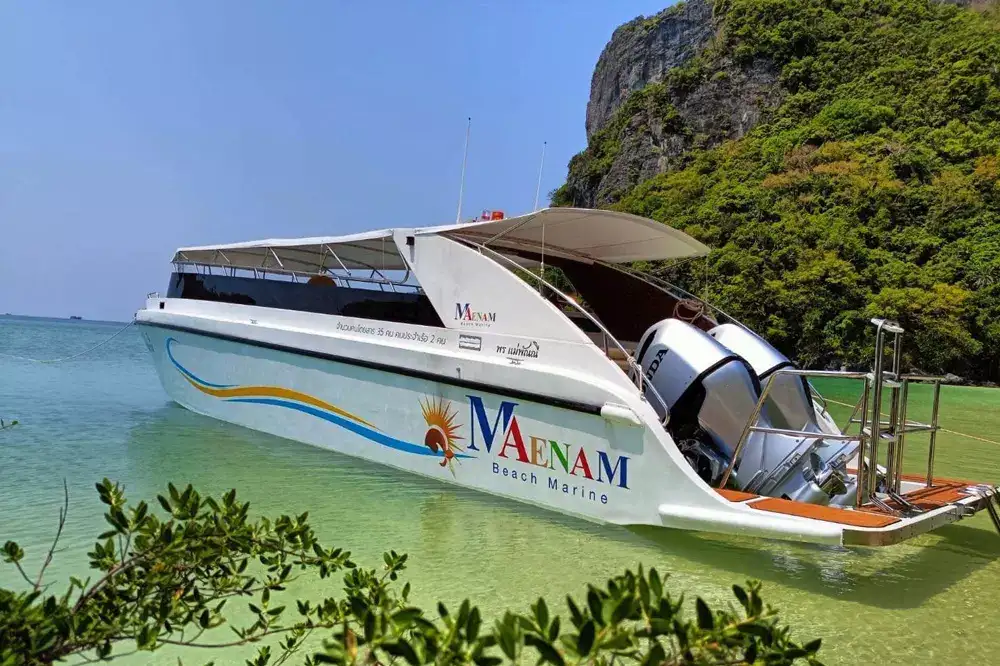
- The VIP speedboat (฿3890, lunch on Koh Phaluai) and the private charter (฿39,000 for up to 6 guests) are the two options that go to the island.
- The park is usually closed from 1 November to 15 December, and no tours run during that time.
After the cliffs, the stairs and the crowd at the viewpoint, the boat slows near a quiet shore and the green comes right down into the water. There are no steps here and no platform, just tangled roots, still shallows and a small splash from something you never quite see.
Those are the Ang Thong mangroves, and most visitors pass them without a second look. I will be straight with you: they are not the headline of the day, but once you know what you are looking at, this quiet forest explains a lot about why the rest of the park is so alive.
What is a mangrove, exactly?
A mangrove is a group of trees and shrubs that can live in salt water, on muddy or sheltered shores between low and high tide. It is not one species but a whole way of living at the edge of the sea. In Thai these coastal forests are called pa chai len, roughly "the forest on the seashore".
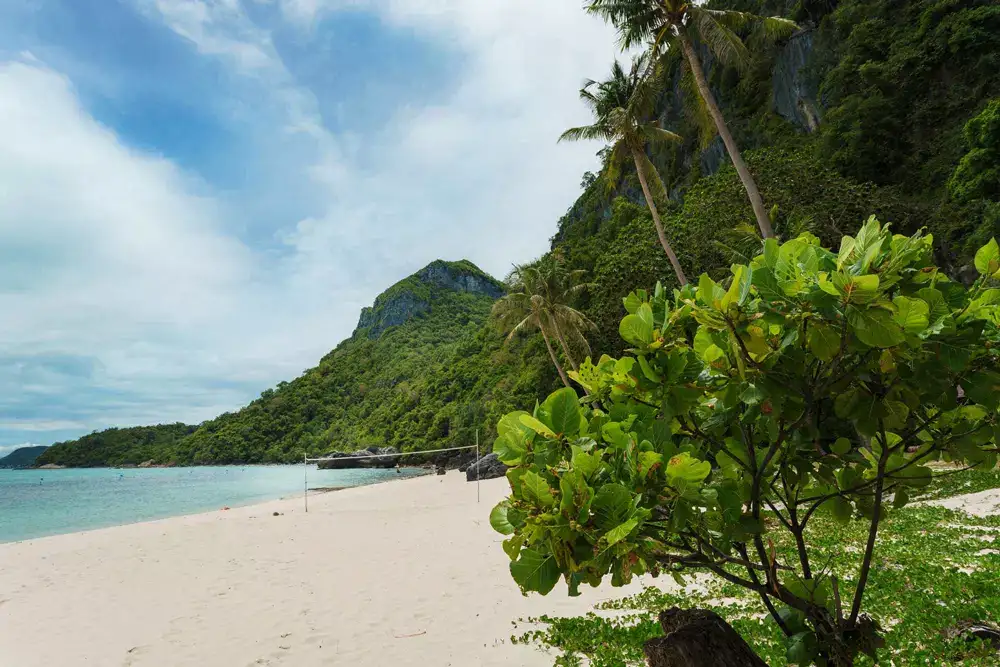
Life in the tide is hard, and these trees have some clever ways of coping:
- Stilt roots hold the trunk up above the water and grip the soft mud, like a tent held by many ropes.
- Breathing roots poke up from the mud like pencils, because waterlogged mud holds very little oxygen.
- Salt control keeps the tree alive: some species block salt at the roots and others push it out through their leaves.
- Ready-grown seedlings on some species sprout while still on the branch, then drop and float away on the tide.
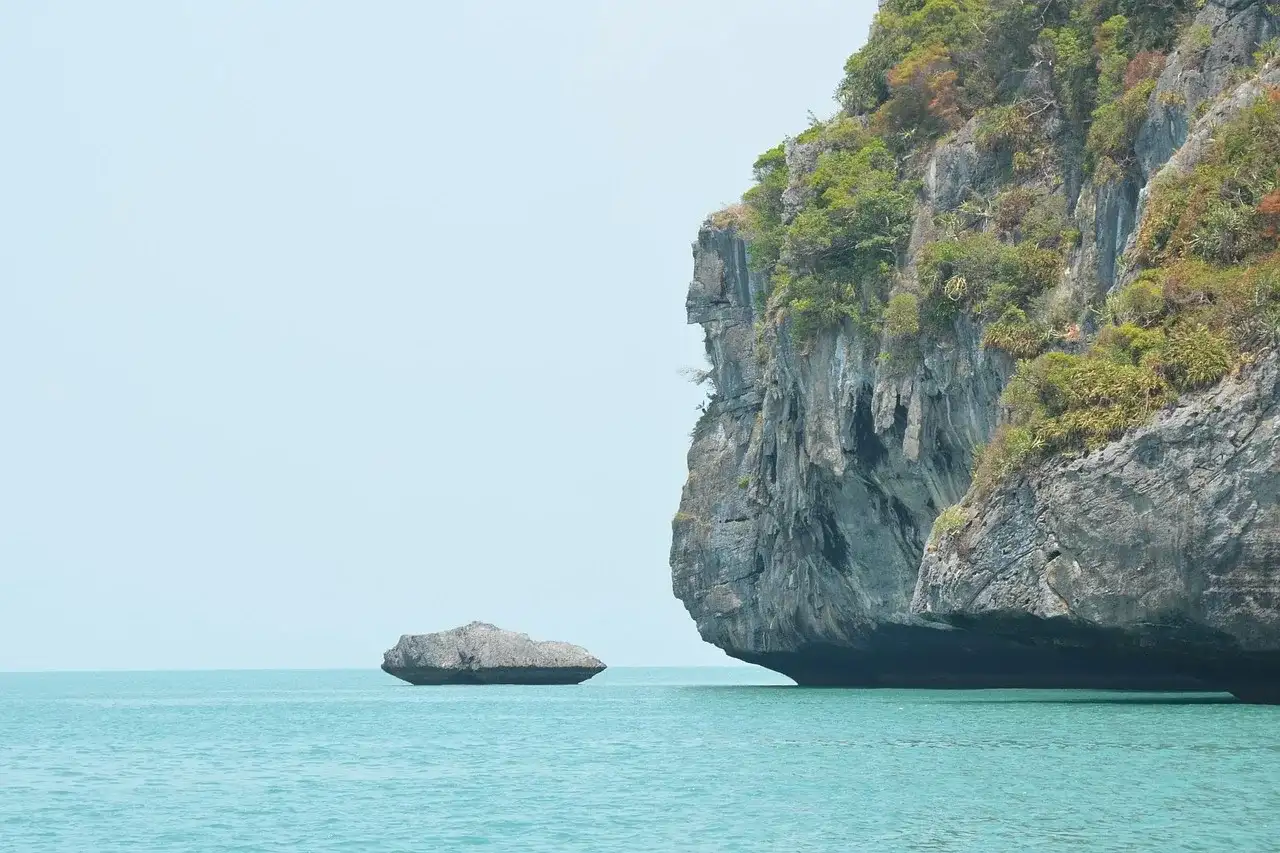
Limestone islands like these are not an obvious home for such a forest. Mangroves need shelter and soft ground, which is why you will not find them on the steep cliffs you see in the postcards. For the story of the rock itself, read this piece on how the cliffs and caves formed.
Where are the Ang Thong mangroves?
The best stands are on the shores of Koh Phaluai, the largest island in the park. Koh Phaluai has some of the best mangroves in Ang Thong, and the park's other islands hold pockets of younger mangrove in sheltered spots.
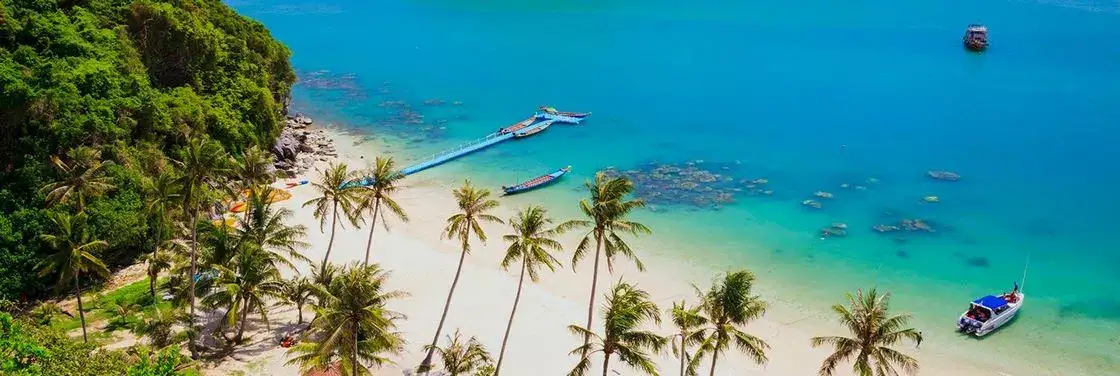
It makes sense when you see the island. Phaluai is big enough to have calm bays, a small fishing village in the south and forest across its northern part, which lies inside the national park. You can read more about daily life there in this guide to Koh Phaluai and its fishing village.
Elsewhere in the park you are more likely to notice young mangroves: small, bright green plants on a muddy edge or in a sheltered inlet, easy to mistake for ordinary shrubs. They are worth a second look, because a thin line of seedlings today can become a proper stand of trees over many years if nothing disturbs it.
Do not expect a vast green maze like the mangrove rivers on the mainland. Ang Thong's are a modest fringe along a mostly rocky park. To me that is part of the charm: it feels like something you have noticed for yourself, not something on a schedule.
Why do mangroves matter for fish and coasts?
They act as a nursery, a filter and a sea wall, all at once. The roots give young fish, crabs and prawns shelter from bigger hunters until they are ready to move out into open water.
Here is what that forest does for the rest of the sea around it:
- It feeds the food chain, as fallen leaves rot and feed the tiny creatures that small fish eat.
- It holds the mud together, which slows erosion and helps to keep coastal land in place.
- It softens waves and storm surges before they reach the shore.
- It keeps water clearer for nearby seagrass and coral by trapping sediment.
- It stores carbon in its waterlogged soil, often for a very long time.
This is also why mangroves are protected in so many countries now. Many coasts in Asia lost large areas of them to shrimp farms and development, and people only saw the cost later, when the fish thinned out and the shoreline began to wash away. Inside a national park, this slow forest gets a better chance.
The link matters most to the people of Koh Phaluai, who live mainly from fishing. Good nursery water close to home helps the catch further out, though no single forest can explain every good season. Mangroves and reefs work as neighbours, and this guide to what you will see while snorkelling shows the other half of the picture.
What can you see from a boat or kayak?
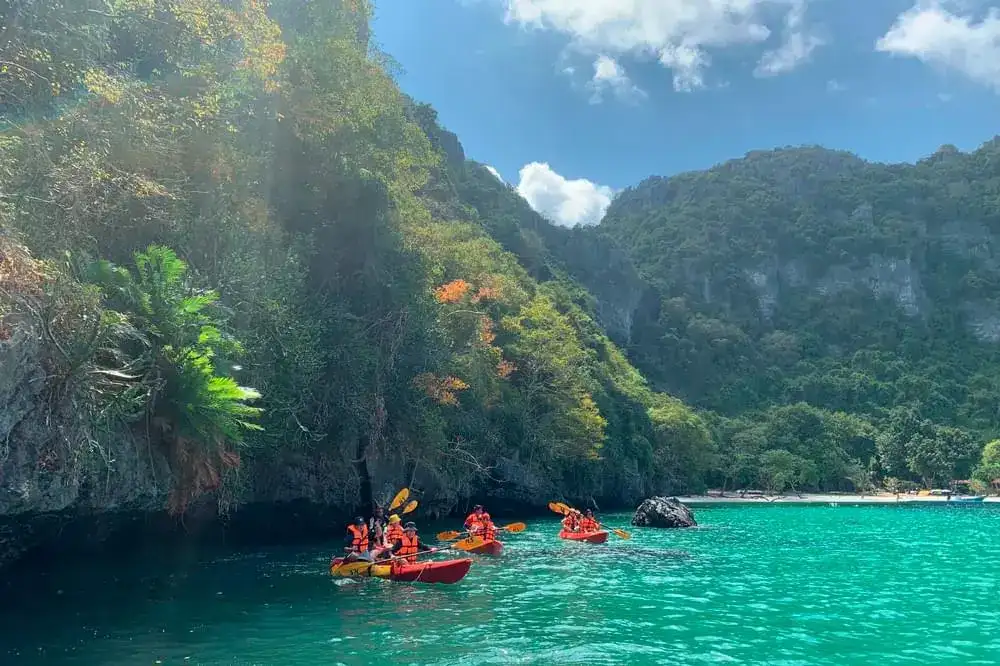
From a boat you see a dark green fringe with roots showing at the waterline, and that is about all. To see much more you need to be low, slow and close, which is what a kayak does best.
Here is what to look for when you are close to a mangrove shore:
- Stilt roots standing clear of the water at lower tides, often with small oysters attached.
- Small crabs on the mud, which quickly vanish into their holes when you move.
- Mudskippers, the odd little fish that walk on land on their fins.
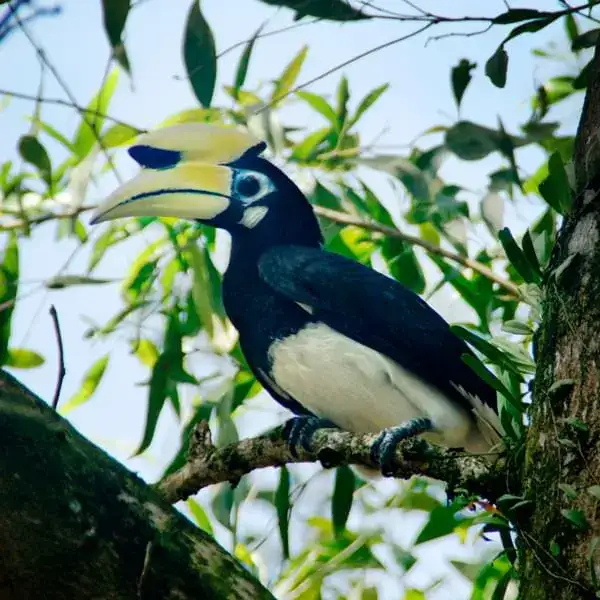
- Kingfishers and white-bellied sea eagles, both among the roughly 50 bird species recorded in the park.
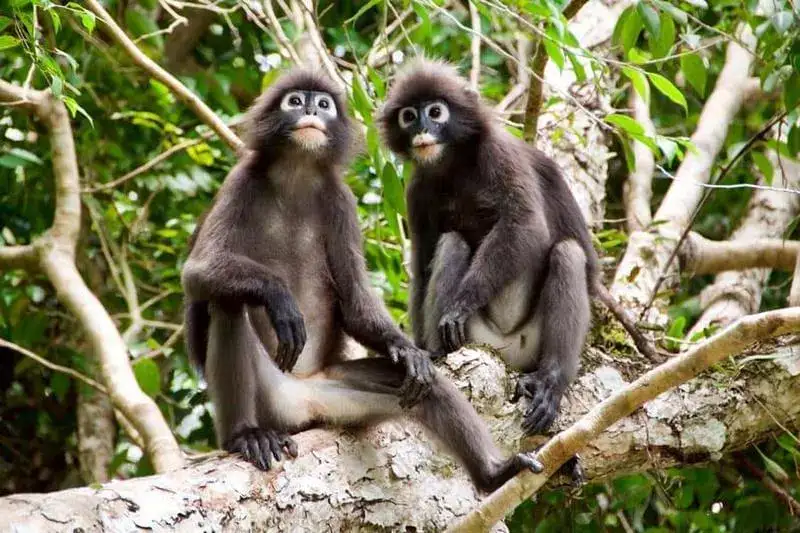
- Long-tailed macaques, which live in the park and in many places forage along mangrove shores for crabs, though you are never guaranteed a sighting.
The honest truth on kayaks: you cannot book a mangrove paddle on any of the tours we sell. Group kayaking takes place at other spots, such as Tamarin Beach, Koh Sam Sao and around Mae Ko, chosen for cliffs and caves rather than roots. See the full breakdown on the Ang Thong kayaking page.
Tide makes a difference too. Roots and mud show best at lower water, while at high tide the forest looks like trees standing in the sea. The captain chooses the route with the tide and the weather, so nobody can promise you the perfect view.
Which tour gets you closest to the mangroves?
The VIP speedboat and the private charter, because these are the two options that go to Koh Phaluai. Neither one is a mangrove tour, so look on the shore as a bonus to enjoy around lunch, not as a stop on the schedule.
| Tour | Price per adult | Koh Phaluai? | Kayaks | Mangrove verdict |
|---|---|---|---|---|
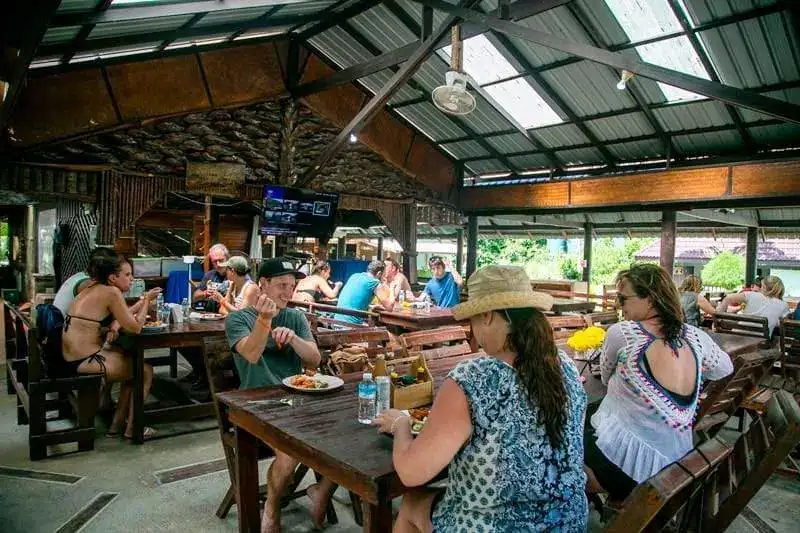
| VIP speedboat | ฿3890 | Yes, buffet lunch | Included, at Koh Sam Sao | Best group choice |
| Private charter | ฿39,000 per boat, up to 6 guests | Typical lunch stop, paid separately | Not included | Most freedom, highest cost |
| Speedboat | ฿1890 | No | Included, at Tamarin Beach | Best general tour, few mangroves |
| Big boat | ฿1100, or ฿1500 with kayaks | No | Optional, around Mae Ko | Choose it for price and comfort |
| Red Baron | ฿3700 | No | None | Choose it for the sailing |
Choose the VIP tour if you want a small group of no more than 16 and a stop on Koh Phaluai, and choose the private boat if you want to agree the route yourself and spend longer on that shore.
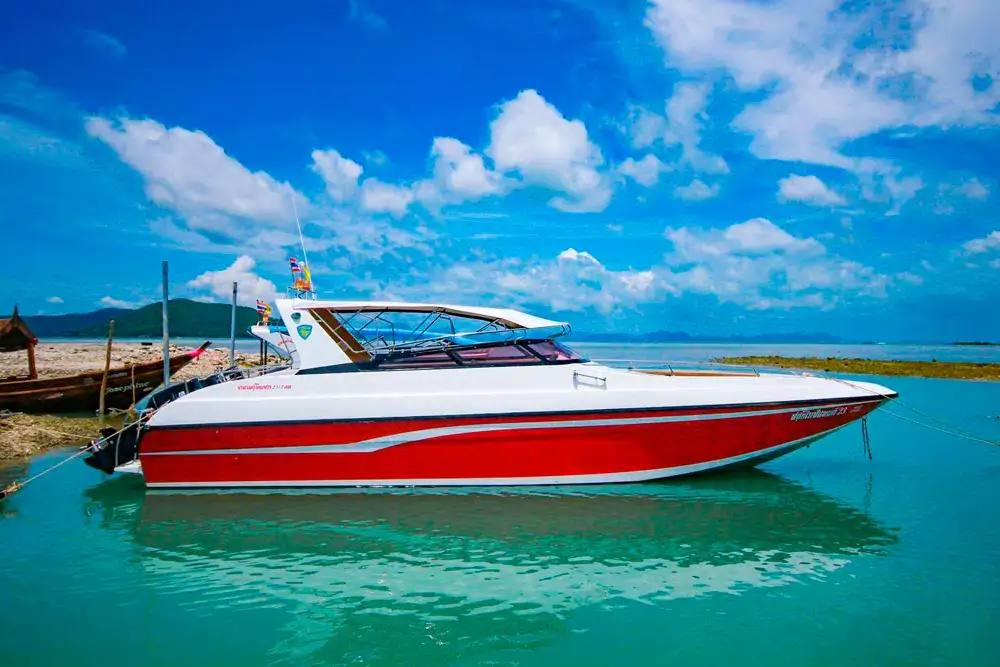
On a charter, tell the crew when you agree the route that you would like to see the mangroves, and ask them what the tide will allow. You will be paying for a whole boat, plus ฿2000 for each guest above 6, so I would only choose this for the mangroves if you already wanted a private day. The park fee and lunch are extra on a charter, while the VIP price already includes the fee.
Is it worth planning your day around them?
No, unless you are a keen birder or naturalist. Choose your tour for the viewpoint, the snorkelling and the lake, then treat any mangroves you spot as a welcome extra.
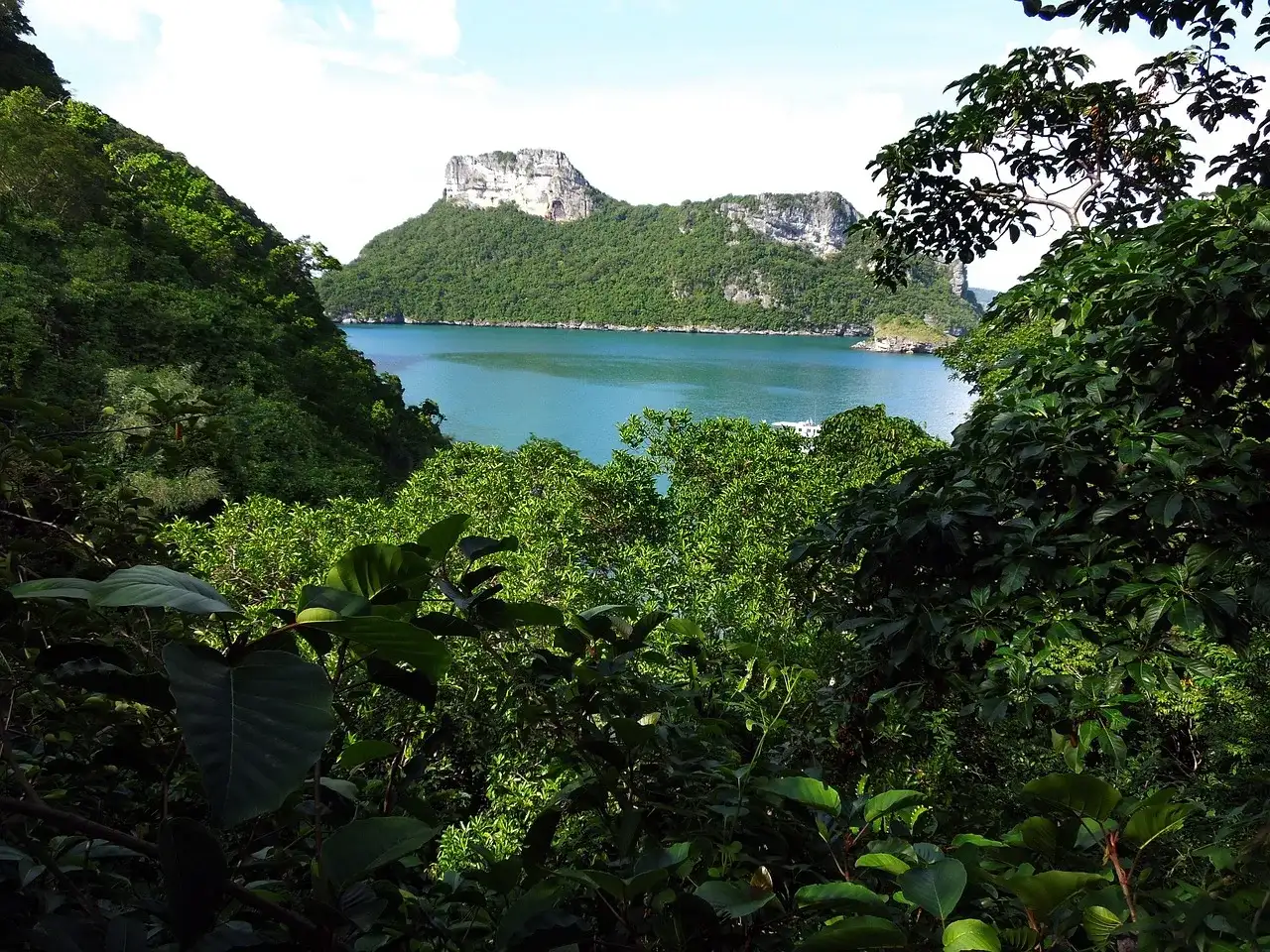
Anyone who really wants to walk or paddle deep into a mangrove forest should treat Ang Thong as the wrong trip and look for a dedicated mangrove outing elsewhere in Thailand. Here, the headline sight is the Emerald Lake on Koh Mae Ko, and the appeal of the mangroves is the contrast: pale limestone, white sand and a dark green strip of forest doing quiet, useful work in the background.
For most first-timers, the regular speedboat tour remains my pick. It is daily, it has four stops, and it costs far less, even with the ฿300 park fee on top. You may not get a close look at the mangroves, but you will see plenty of what they help to support.
How to look after the mangroves and plan your visit
Look, do not touch, and keep your distance from the roots. The park is usually closed from 1 November to 15 December every year, and no tours run in that time, so plan your trip around those dates.
- Stay off the roots and out of the soft mud, as both are easily damaged and the mud can be deep.
- Do not take shells, seedlings or anything else home with you.
- Do not feed the monkeys or fish, however keen they look.
- Pack a small pair of binoculars or a phone with a good zoom for the birds.
- Wear reef-friendly sunscreen and a hat, since there is little shade on a boat.
January to September usually brings the calmest sea and the clearest water, so that is my pick for any quiet time near the shore. October and late December are the rainy season, when the captain can change the route on rough days.
Questions and answers
Are there mangroves on every island in Ang Thong?
No. Most of the 42 islands are limestone with steep cliffs and small beaches, which do not suit mangroves. The best stands are on the shores of Koh Phaluai, and younger mangroves grow in a few sheltered spots.
Can I swim near the mangroves?
I would not plan on it. The water tends to be murky and the bottom muddy, with sharp roots and shells underfoot. Swim from the white beaches on the tour stops, where it is clearer and far more pleasant.
Are there crocodiles or dangerous animals in the Ang Thong mangroves?
Crocodiles are not among the animals you need to think about on an Ang Thong day trip. The more likely trouble is small: biting insects, sharp oysters on the roots and deep mud. Keep your distance, and you will have no problem.
Do mangroves smell bad?
At low tide the mud can have a slight eggy smell, which comes from natural decay in the low-oxygen soil. It is a normal part of a healthy mangrove, not a sign of pollution. From a passing boat you will hardly ever notice it.
Do mangroves have anything to do with the Emerald Lake?
No. The Emerald Lake on Koh Mae Ko is a saltwater lagoon connected to the sea through underground tunnels, and you see it from a viewing platform. It sits inside limestone walls and is a separate sight, one that every group tour visits.
Is the Ang Thong park fee different for seeing the mangroves?
No, the mangroves are simply part of the park, so there is nothing extra to pay for them. The national park fee is ฿300 per adult and ฿150 per child, paid in cash at the park. It is already included in the VIP speedboat and Red Baron prices.
Can children visit the mangroves on a tour?
Yes. On the VIP speedboat, which stops on Koh Phaluai, children aged 4-10 pay ฿2890 and children under 4 go free. Kayaking in the park is allowed from 5 years old, without exceptions. Pregnant women cannot book the VIP tour for safety reasons.
Can I stay overnight to see the mangroves at a quieter time?
The park has bungalows and a campsite on Koh Wua Ta Lap, but day tours from Koh Samui do not include an overnight stay. Those places are at the headquarters rather than Koh Phaluai, so a stay would not put you right beside its mangroves. For most people a day trip is plenty.
Facts checked against our tour pages on 19 November 2026. Prices and days can change: your manager confirms them when you book.