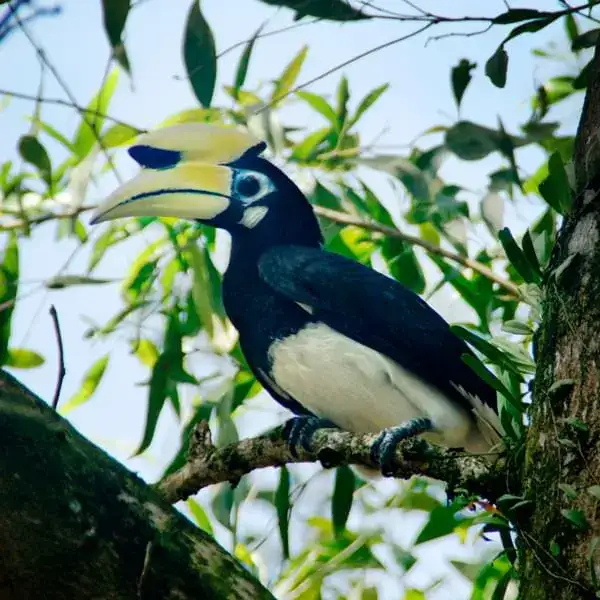
- About 50 bird species are recorded in Mu Ko Ang Thong National Marine Park, including oriental pied hornbills, white-bellied sea eagles and kingfishers.
- Your best chance of a hornbill is in the forest around the park headquarters on Koh Wua Ta Lap, where they are often seen and heard.
- The big boat reaches Koh Wua Ta Lap at about 09:50, the cooler part of the day, while the regular speedboat gets there at about 14:00.
- Compact binoculars are worth packing because they are not on the included list of any tour, and a low magnification is easier to hold steady on a boat.
- The park is usually closed every year from 1 November to 15 December, so no birdwatching day trips run in those weeks.
The boat slows off Koh Wua Ta Lap and a loud, cackling call comes out of the forest, more like an argument than a bird. Nearly everyone on deck is looking at the beach. Look at the tree line instead: Ang Thong birds rarely get a mention on tour leaflets, yet a few of them are big enough to spot without ever having owned a field guide.
This is not a specialist birding trip, and I would not sell it to you as one. It is a normal island day with good birds around the edges. Here is how to see more of them without giving up the viewpoint, the reef or lunch.
Which Ang Thong birds will you actually notice?
Most visitors notice three: the oriental pied hornbill, the white-bellied sea eagle and a kingfisher or two. The park authorities record about 50 bird species in total, but many of them are small, shy and deep in the forest, so a day visitor sees only a fraction.
That number also needs some honesty. The islands are steep limestone with thick forest, and you visit a few of them for a few hours each. Treat every good sighting as a bonus, not as something the tour owes you.
| Bird | How to recognise it | Where to look |
|---|---|---|
| Oriental pied hornbill | Large, black and white, with a heavy pale bill and a casque on top | Forest edge behind the beach on Koh Wua Ta Lap |
| White-bellied sea eagle | Big raptor, white head and belly, grey back and wings | In the sky above cliffs and open water, or on a high bare branch |
| Kingfisher | Small and compact, large bill, flash of blue when it flies | Low branches and rocks at the shoreline, mangrove edges |
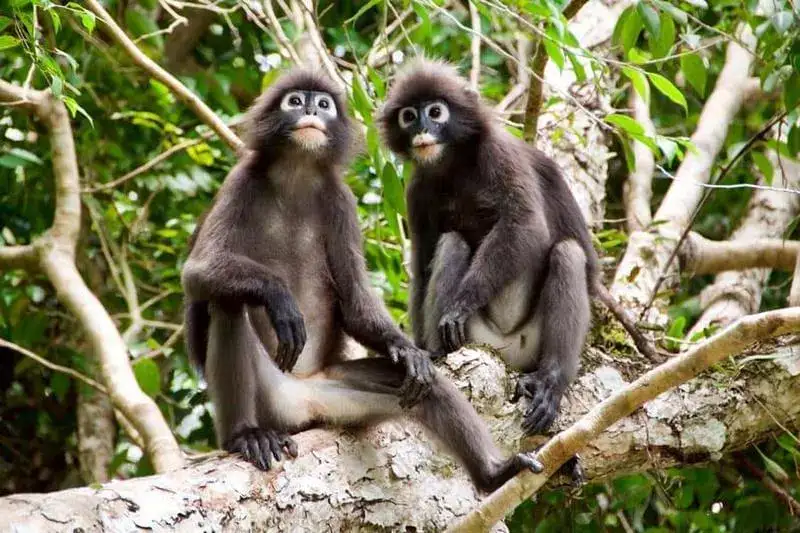
If you want the wider picture, including langurs, otters and whales, the Ang Thong wildlife guide covers the mammals and sea life too. The rest of this article stays with the birds.
Where do you see hornbills in Ang Thong?
The forest around the park headquarters on Koh Wua Ta Lap is the place. Oriental pied hornbills are often seen and heard there, and it is the one spot where I would tell you to expect at least the sound of them.
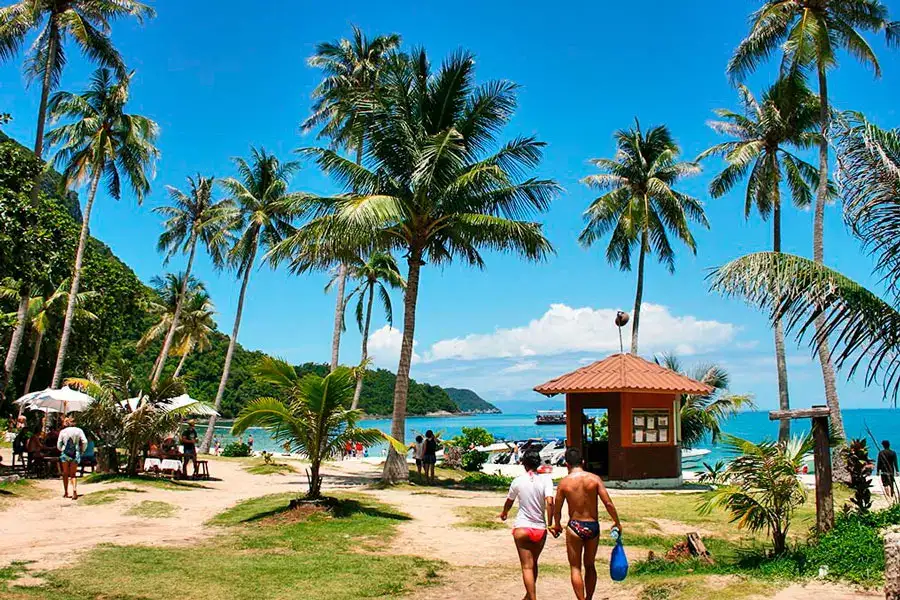
Listen first. The call is a harsh, repeating cackle that carries a long way, and the wings make a whooshing sound when a bird crosses overhead. Then look for fruiting trees, because that is what keeps them in one area for a while.
Hornbills pair for life, so if you see one, wait a moment and scan nearby branches for the second. They also matter far beyond being a good photo: they spread the seeds of hundreds of fruit trees through the forest, which is why they are such an important part of an island like this one.
The guide to Koh Wua Ta Lap shows how the beach, the restaurant, the ranger station and the trails fit together. You do not have to climb to see hornbills, and in my experience the beach edge is at least as good as the trail, because you can stand still there without blocking anyone.
How do you spot a white-bellied sea eagle?
Look up, away from the crowd, whenever the boat passes a cliff. A white-bellied sea eagle is one of the largest raptors you will see in the Gulf of Thailand, and its white head and underparts show clearly against dark rock.
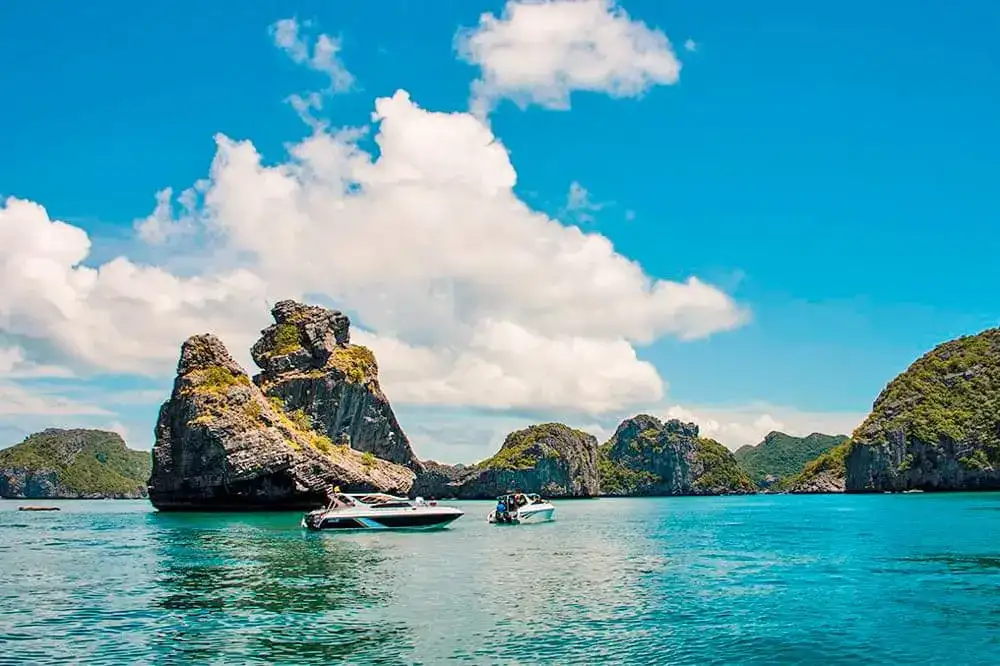
In flight the wings are long and broad and held in a shallow V, which helps you separate it from the smaller brown-and-white kite that also hunts along Thai coasts. It often glides for a long time with hardly a wingbeat, then drops low to snatch something from the surface with its feet.
You do not need to be on land for this. Some of my best sightings have been from the boat on the way between stops, when everyone else was checking their photos from the last island. If you get seasick, keep your eyes on the horizon anyway: it is good advice for your stomach and for spotting eagles.
Where do kingfishers hide?
Kingfishers sit low and close to the water, on branches, rocks and mangrove roots. They are small and easy to miss until they fly, and then the flash of blue is what you remember.
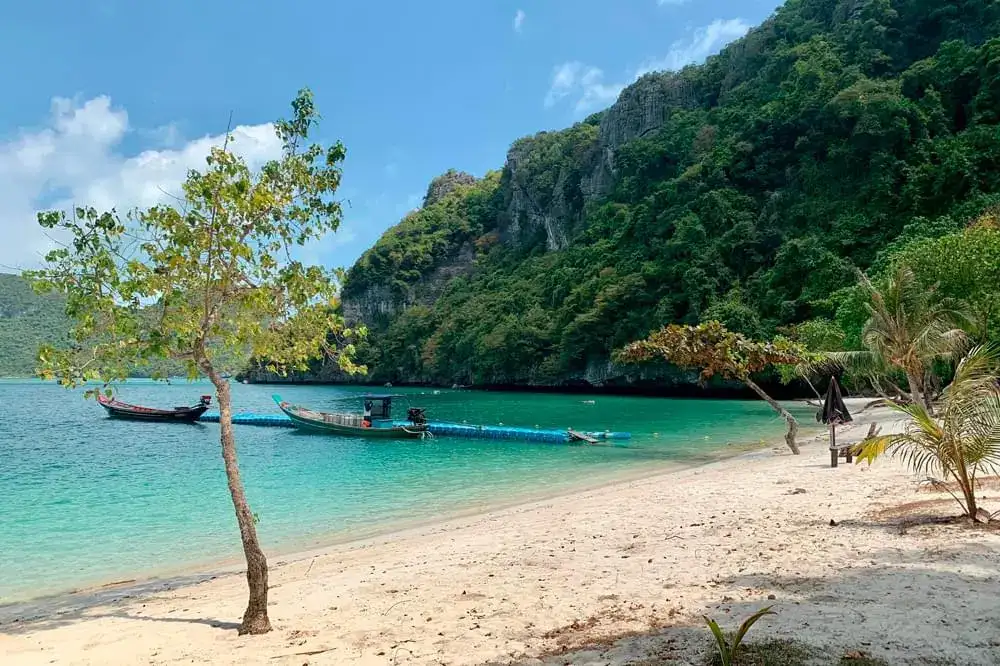
The species recorded in the park may vary, so I will not promise a particular one. On Thai coasts the bird people meet most often is the collared kingfisher, blue-green above with a clean white collar, and it tends to announce itself with a loud, repeated call.
Mangroves are the natural habitat to check. The shores of Koh Phaluai have some of the best mangroves in the park, and the article on Koh Phaluai and its fishing village explains what that island is like. Only the VIP speedboat and private tours stop there, and the lunch stop is not a mangrove walk, so keep expectations modest.
Keep half an eye out for other coastal birds as well. Herons on the rocks, terns over the water and swiftlets around limestone are all typical of this part of the Gulf, though I would not treat any of them as guaranteed on a given day.
What is the best time of day for birds in Ang Thong?
Early morning and late afternoon are best, as they are almost everywhere in the tropics. Forest birds go quiet in the midday heat, which is exactly when many tour groups reach the islands.
Raptors are the exception. Sea eagles and kites use rising warm air, so late morning and the hot part of the day can still be good for looking up, even when the trees have fallen silent.
Season matters less for the resident birds than for the sea. From January to September the water is usually calm, and a steady boat makes it far easier to follow a bird. October and the second half of December are rainier and rougher. The park is usually closed every year from 1 November to 15 December, so no tours run in those weeks. The month-by-month guide to Ang Thong has the detail if you are still choosing dates.
Can you see more by staying overnight?
Yes, this is the only way to be in the park at dawn and dusk. Koh Wua Ta Lap has park bungalows and a campsite, though day tours from Koh Samui do not include an overnight stay.
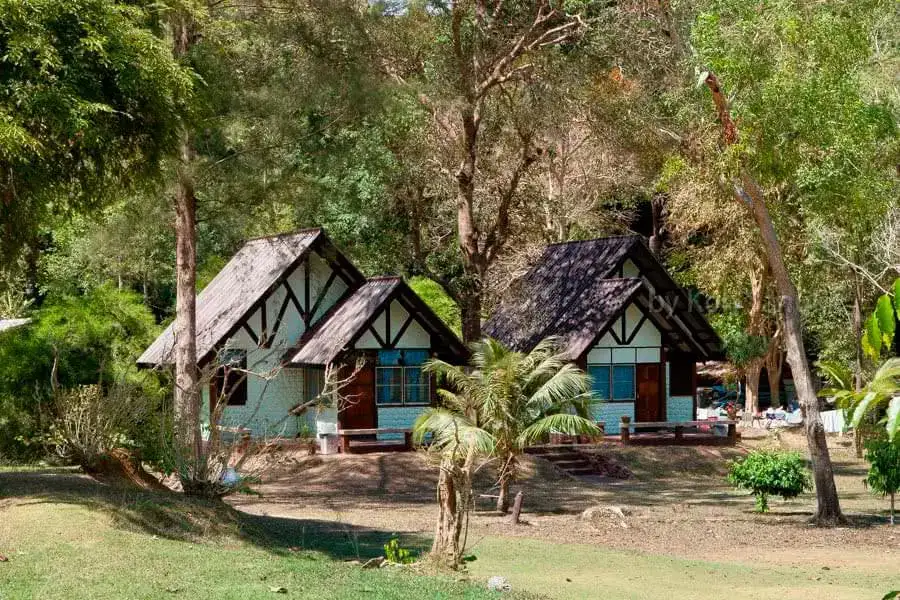
This is for keen birders rather than most visitors. There is no public ferry to the park, so check how you would get there and back before you commit, and message the team on WhatsApp if you want to talk it through.
Are binoculars worth bringing to Ang Thong?
Yes, if they are small. Binoculars are not on the included list of any tour, so bring your own, and choose a compact, low-power pair rather than a heavy one. On a moving boat, high magnification only shows you a shaking blur.
Here is what I would pack for the birds, on top of the usual day kit:
- Compact 8x binoculars, ideally waterproof, on a neck strap so they do not end up in the sea.
- A dry bag or waterproof pouch for binoculars and phone, since boarding and landing can be wet.
- A long lens only if you already own one and are willing to protect it from salt spray.
- A free bird identification app, with the region downloaded before you leave your hotel.
- Water and shoes with grip, because the best views of the forest come from walking a little.
A phone camera will do for a hornbill sitting in the open and little else. If a photo is the main goal, accept that you may come home with a good memory and a blurry dot. Please keep your distance and never feed wildlife, even if a bird or a langur comes close.
Which Ang Thong tour is best for birdwatching?
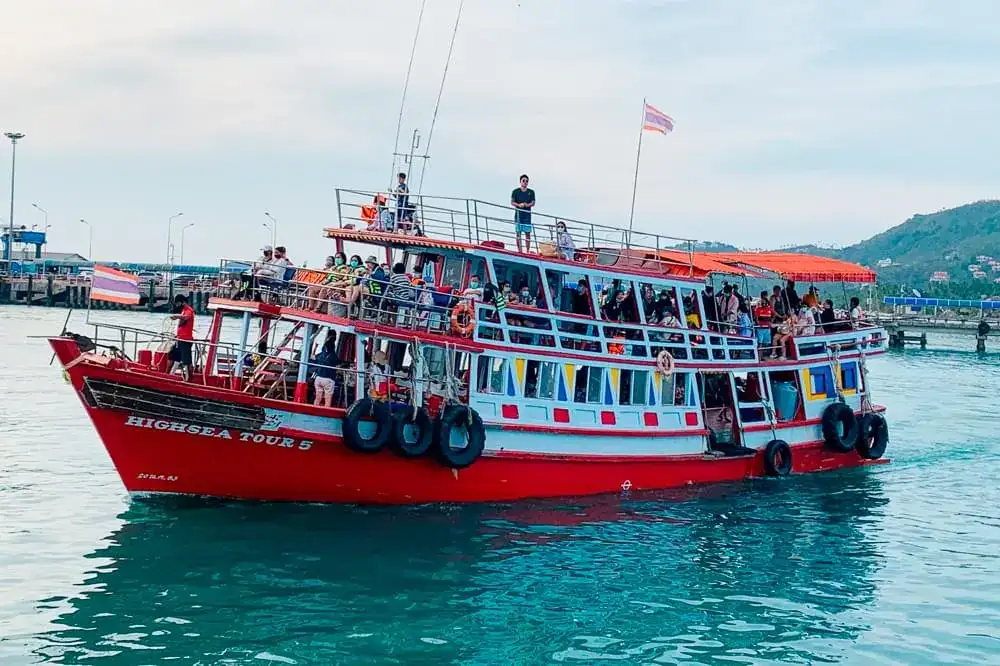
The big boat is my pick for birds on a budget. It reaches Koh Wua Ta Lap at about 09:50, and lunch on board is not until 12:30, so the schedule leaves you the most relaxed stretch on the island during the cooler part of the day.
| Tour | Time at Koh Wua Ta Lap | For birds |
|---|---|---|
| Big boat, from ฿1100 | From about 09:50 | Cooler hours, steady deck, plenty of people but plenty of space |
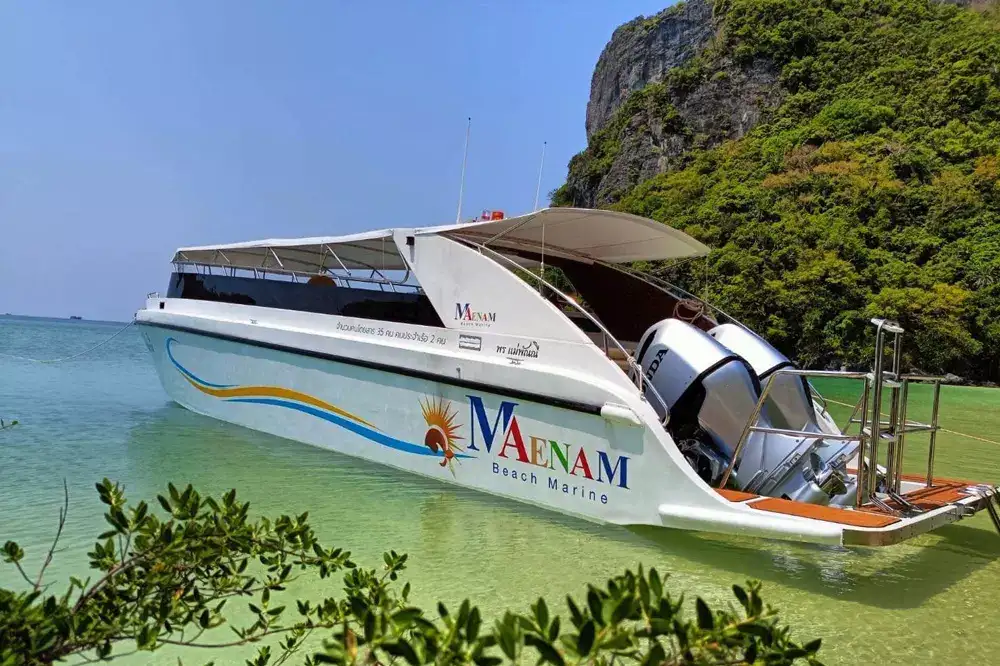
| VIP speedboat, ฿3890 | Second stop of the morning | Up to 16 guests, also stops on Koh Phaluai for lunch |
| Speedboat, ฿1890 | From about 14:00, boat leaves at 15:30 | Hot, quieter hours in the forest; better for raptors than hornbills |
| Red Baron, ฿3700 | Viewpoint at about 15:30 | Slow day on deck, and a late sail back on a clear evening |
| Private boat, ฿39,000 for up to 6 | Your choice | Start time and stops to suit you, at a much higher price |
The big boat tour also has a practical bonus: the slower crossing gives you more time on deck to scan the sky and the cliffs. The price of that is a long day and a lot of company.
I would not book a private boat for birds alone, since the cost is hard to justify unless the group wants that freedom for other reasons too. On the regular speedboat, stay on the beach edge at Wua Ta Lap and keep watching the sky rather than rushing to fit everything in.
Choose the big boat if you want cooler hours and a steady deck at the lowest price, or the VIP speedboat if you prefer a small group and a morning on Wua Ta Lap.
Before you go: a short bird checklist
For a normal day trip, a few small habits make the biggest difference. Stand still for five minutes at the edge of the beach on Wua Ta Lap: it will show you more than an hour of walking and talking.
- Check your date first: the park is usually closed from 1 November to 15 December, and the exact dates are announced each year.
- Keep binoculars around your neck on the boat, not at the bottom of a bag.
- When you land, walk away from the crowd and listen before you look.
- Decide early between the viewpoint and the forest edge. If the climb is the priority, read how hard the Wua Ta Lap viewpoint hike really is.
- Note what you saw and when. It makes the day more fun, and a photo of a distant shape is easier to identify later.
Questions and answers
How many bird species live in Ang Thong?
The park authorities record about 50 bird species. Oriental pied hornbills, white-bellied sea eagles and kingfishers are among them. Most day visitors see only a small part of that list, because many of the birds are shy and stay in the forest.
Do the tours include a birdwatching guide?
No, the guides on these tours lead the group through the day's stops and are not there for birding as such. They may point out a hornbill or an eagle if one appears. Bring your own binoculars and treat the birds as something you look for between the main stops.
Are hornbills easy to photograph in Ang Thong?
Sometimes, but do not count on it. You are most likely to see them around the park headquarters on Koh Wua Ta Lap, often high in the trees. A phone can manage a bird sitting in the open, while a long lens gives you a much better chance.
Can I visit Ang Thong just for the birds without a tour?
There is no public ferry to the park, so you need a tour or a private boat from Koh Samui. A private charter lets you choose the start time and how long you stay at each stop. It costs ฿39,000 for up to 6 guests, so it only makes sense if the whole group wants that freedom.
Is Ang Thong open for birdwatching all year?
No. The park is usually closed every year from 1 November to 15 December to let nature recover, and no tours run then. The exact dates are announced each year, so check when you book a trip close to those weeks.
Are the birds a good reason to bring children?
Children often enjoy spotting hornbills and eagles, especially with a small pair of binoculars of their own. The park's langurs tend to hold their attention longer, though. Treat birds as one small game during the day, not as the main plan for a child.
Is it safe to use binoculars on a speedboat?
Only when the boat is slow or stopped. At speed the boat bounces too much to see anything useful, and you should keep a hand free to hold on. Use them at anchor, on the beach or on the deck of the big boat.
Facts checked against our tour pages on 15 November 2026. Prices and days can change: your manager confirms them when you book.