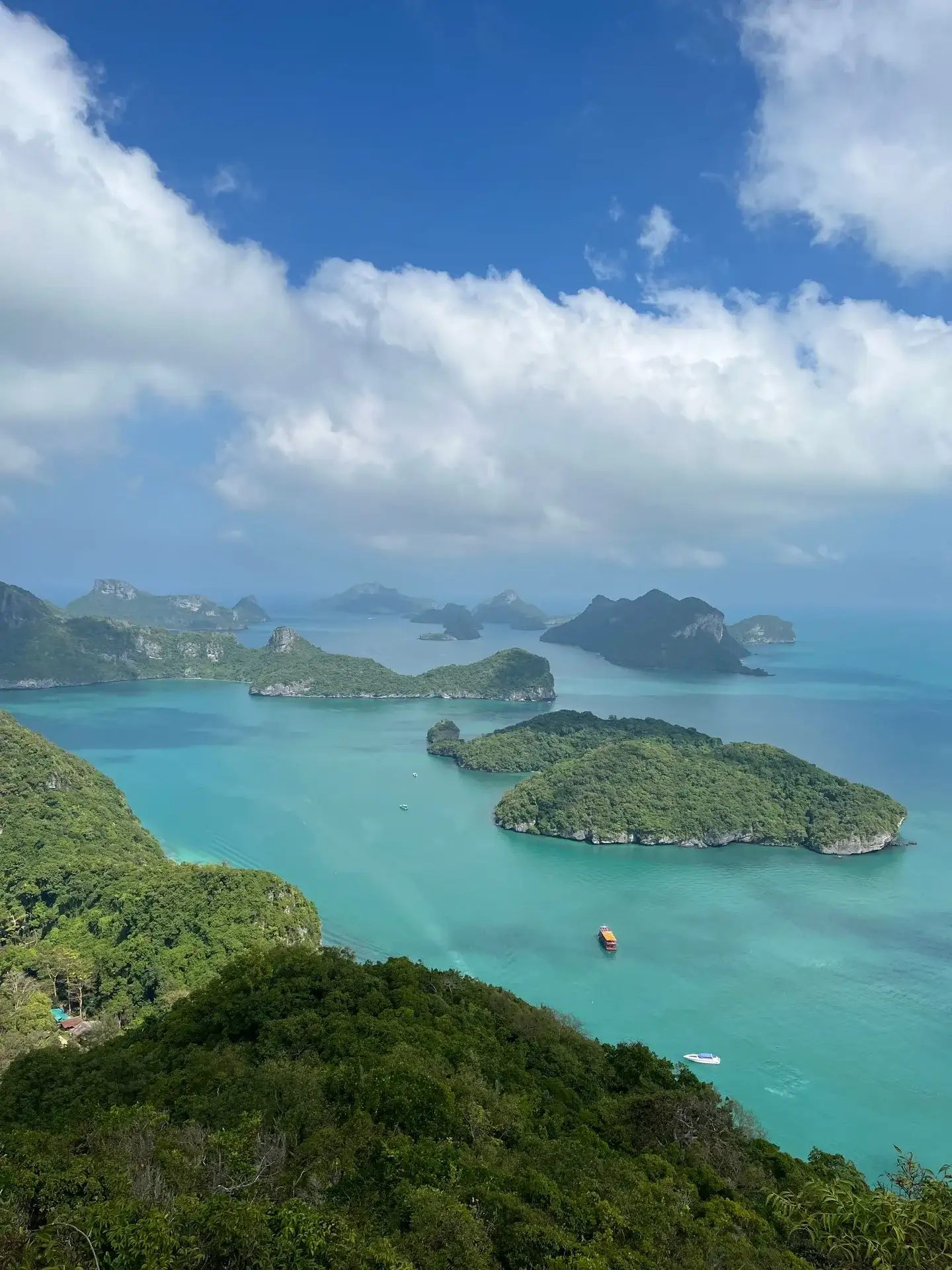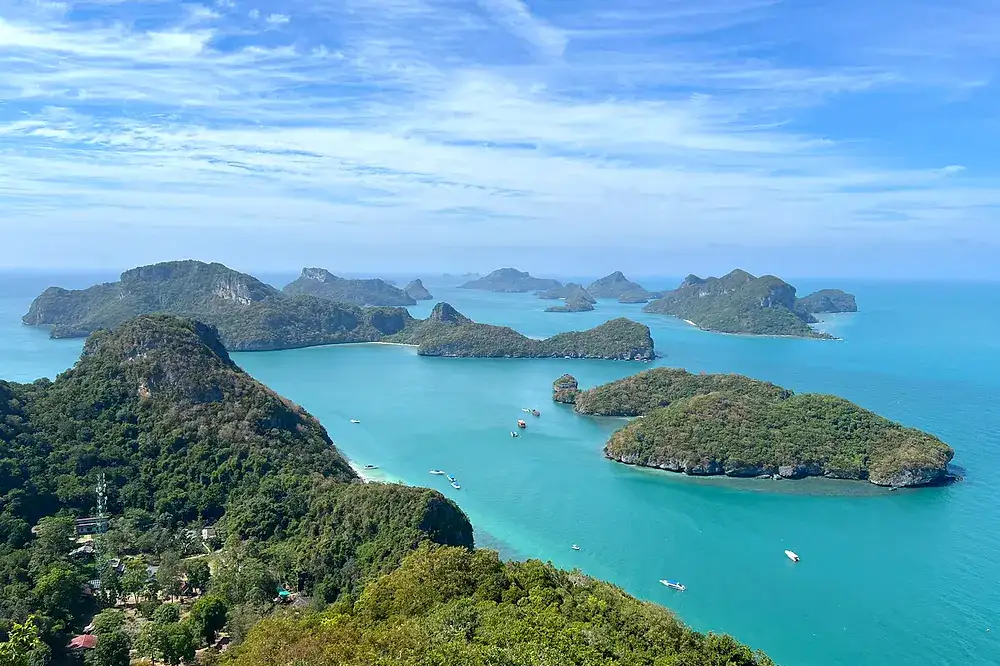
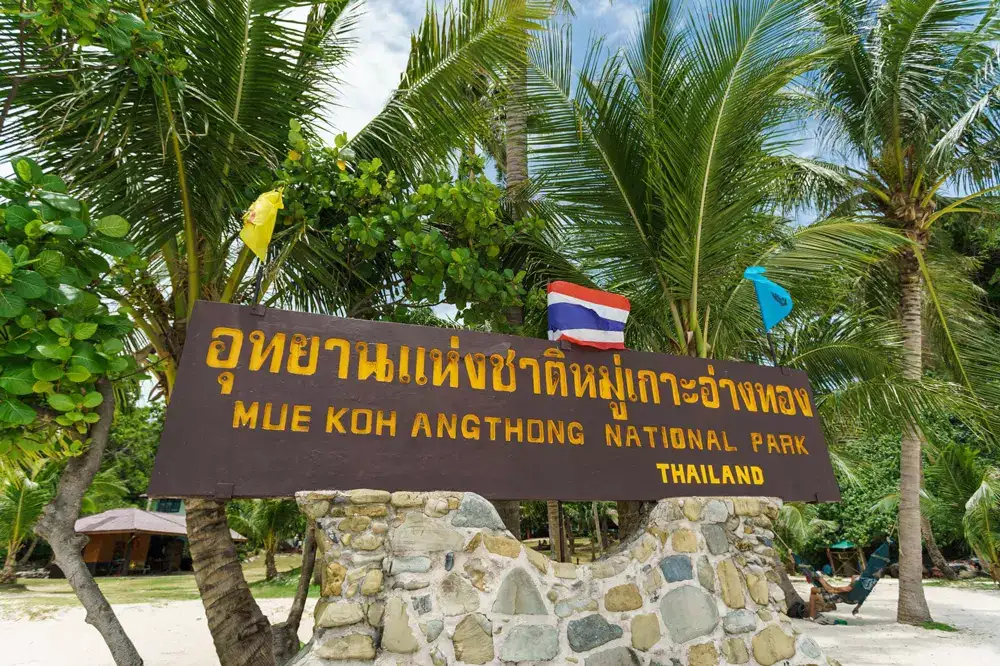
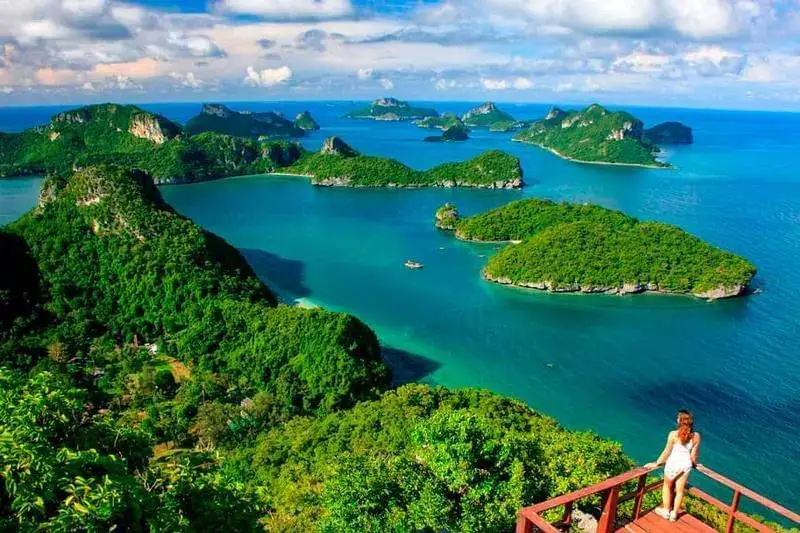
- Mu Ko Ang Thong has been a national park since 12 November 1980 and covers about 102 km² of sea and 42 islands.
- The park is usually closed every year from 1 November to 15 December to let nature recover, and no tours run in that period.
- Swimming in the Emerald Lake on Koh Mae Ko is not allowed, to protect a closed saltwater lagoon.
- Standing on coral and feeding fish or langurs harms the park; the reefs recover slowly.
- All tours on angthong.net are run by licensed local operators and sold by a TAT-licensed agency (TAT 44/00444).
The snorkel masks are coming out of the crate, the boat is drifting over the reef at Koh Wao, and someone near the stern asks whether it is fine to stand on the rocks to fix a strap. That small question is where Ang Thong conservation really happens: not in an office, but in the choices a few thousand visitors make every week in the water and on the beaches.
This guide explains how the park is protected, what the annual closure is for, and what you can do on a normal day trip from Koh Samui so the islands look the same for the next boat. None of it is difficult, and most of it makes your own day better too.
What does Ang Thong conservation actually protect?
It protects a whole small world: 42 limestone islands, shallow coral reefs, young mangroves, forest on the cliffs and the animals that live there. Mu Ko Ang Thong has been a national park since 12 November 1980, and it covers about 102 km² with an average water depth of around 10 metres.
People live on only two islands: the fishing village on Koh Phaluai and the park headquarters on Koh Wua Ta Lap, where the rangers are based. Everything else is left to the forest, the sea and the wildlife.
The park authorities have recorded 16 mammal species, 14 reptile species, 5 amphibian species and about 50 bird species. The best known are the dusky langurs around the headquarters, the oriental pied hornbills in the forest, and the Ang Thong lady's slipper, a rare orchid that grows on the limestone cliffs and has become the symbol of the park.
Under the water there are hard corals, parrotfish, rays and sea urchins, and green turtles and the rare hawksbill turtle live in the coral gardens. Out at sea, Bryde's whales are sometimes seen from the boats. For the full picture of the islands and how they fit together, the main Ang Thong guide is the best place to start.
Why is Ang Thong closed from 1 November to 15 December?
The park is usually closed every year from 1 November to 15 December to let nature recover. No tours run during the closure, and the park sells no tickets for those dates, so they simply cannot be booked.
Six weeks without boats, footsteps and anchors in the bays gives the reefs, beaches and trails a rest. It also falls in the wettest, roughest part of the year on the Samui side of the Gulf, when the sea would make many trips uncomfortable anyway.
The exact dates are announced by the Department of National Parks each year, so if you are planning a trip for late December, check with us before you book. We wrote a separate piece on what the November to mid-December closure means for your holiday, including what to do on Koh Samui instead.
My honest view: the closure is good news for anyone who visits in the other ten and a half months. The islands you see in January look as green and clean as they do because they get that break.
How do you snorkel without damaging the reef?
Float, do not stand. The reefs in Ang Thong are shallow, often just a few metres below the surface, and the coral recovers slowly once it is broken or trampled. One careless step can undo years of growth.
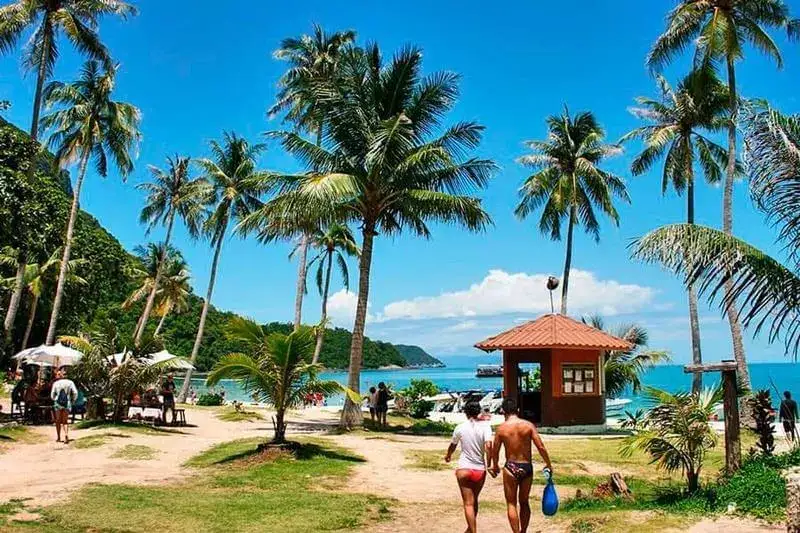
Most damage on a snorkel stop is not deliberate. It comes from people who get tired, put a foot down to rest, or kick hard right above the coral. A few habits fix almost all of it:
- Wear the life jacket that is handed out on the boat if you are not a strong swimmer. It lets you rest on the surface instead of on the reef.
- Sort out your mask on the boat or in deep water, never standing on rocks or coral.
- Keep your fins or feet away from the reef and kick slowly with straight legs.
- Look, but do not touch: coral, sea urchins, starfish and shells all stay where they are.
- Do not chase turtles or rays. If you stay still, they often carry on as if you were not there.
- Stay near the guide, who knows where the water is deep enough over the coral.
A practical point: the water is clearest from January to September, when the sea is calm. After rain or strong wind it can be cloudy, and in poor visibility people tend to bump into things. On those days, swim a little further from the reef rather than closer.
If you want to know what you will actually see down there, read the honest guide to snorkeling in Ang Thong.
Can you feed the langurs or the fish?
No, please do not feed either. Feeding the fish harms the reef, and feeding the langurs harms the monkeys, and the guides on every tour will ask you not to.

The dusky langurs live in families of 4 to 30 in the trees around the headquarters on Wua Ta Lap. They are leaf monkeys, with dark grey fur, white rings around the eyes and golden orange babies, and they eat what the forest gives them. Bread, crisps and fruit from a tourist bag are not part of that diet.
Monkeys that learn to expect food from people change their behaviour: they come down to the beach to wait for boats, grab bags and start to fight over handouts. Long-tailed macaques also live in the park, and they are bolder than the langurs. Keep food zipped away on the beach and eat it on the boat or at the restaurant.
With fish it is the same story underwater. Bread and biscuits thrown from a boat pull in a few greedy species, the rest of the reef life gets pushed out, and the leftovers rot on the coral. The fish you see without food are the fish that really live there. The blog article on where to see the dusky langurs explains how to get close enough for a good photo without bothering them.
Why can't you swim in the Emerald Lake?
Because the lake is a closed ecosystem. Swimming in Thale Nai on Koh Mae Ko is not allowed, and kayaks and boats are kept out of it as well, to protect the lake.
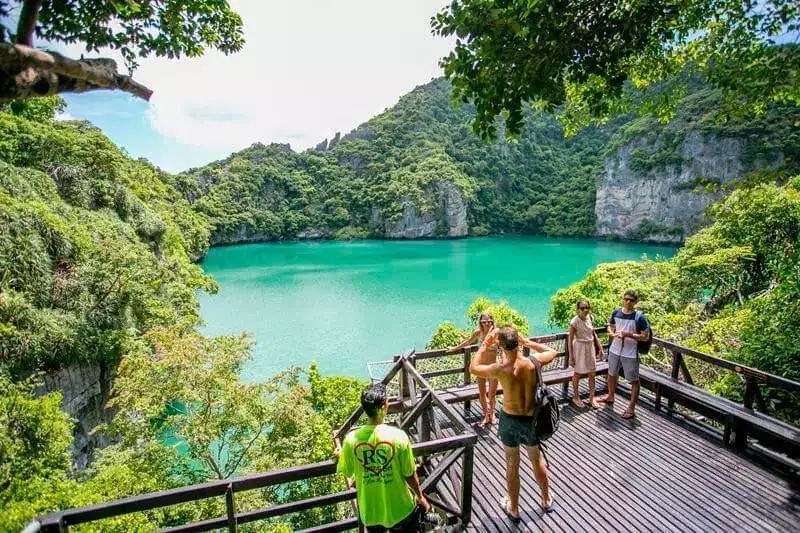
Thale Nai is a green saltwater lagoon hidden inside the limestone walls of Mae Ko. It joins the sea only through underground tunnels, so its level rises and falls with the tide, but water and life move in and out much more slowly than on an open beach. Sunscreen, sweat and thousands of feet would change it quickly.
So you see it from above. A stairway with handrails climbs through the rocks to a viewing platform over the lake: short, steep in places, and hot work in the midday sun. Stay on the stairway and the platform, do not climb over the rail for a better angle, and leave the plants on the cliffs alone, because some of them are the rare lady's slipper orchids.
Every group tour stops here, and the Emerald Lake guide has the times for each one, plus tips for the climb.
What should you do about rubbish and sunscreen?
Take back everything you bring, and keep sunscreen off the reef as much as you can. Anything left on a beach in Ang Thong stays there or ends up in the sea, because there is nobody else to carry it away.
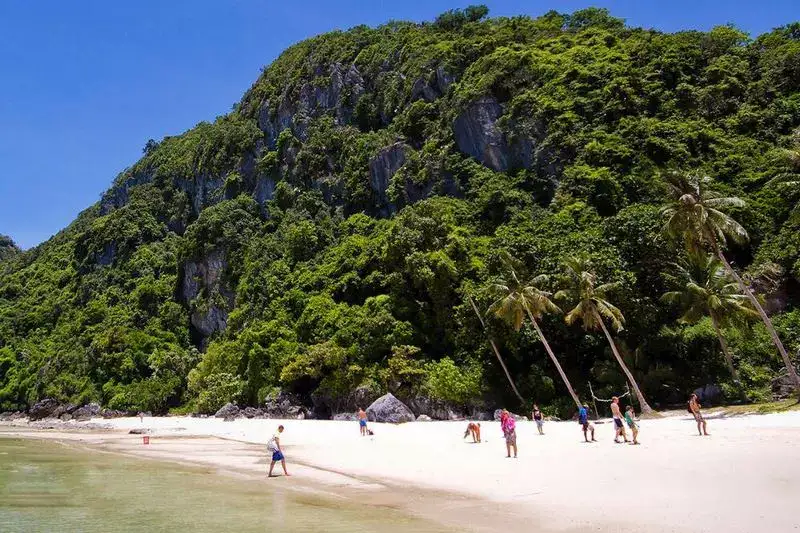
The islands have no towns and no daily rubbish trucks. A plastic bottle dropped on the sand on Tamarin Beach or Wua Ta Lap either gets picked up by someone who cares or washes into the water with the next tide. Bring a small bag, put wrappers and bottles in it, and empty it on the boat or back on Koh Samui.
Sunscreen is a quieter problem. Chemical sunscreen washes off in the water, and a lot of people swimming in one small bay leave a film on the surface right above the coral. My advice, as a habit rather than a park rule:
- Put sunscreen on at the hotel or at least half an hour before the first swim, so it has time to soak in.
- Cover up instead of re-applying: a long-sleeved rash guard and a hat protect you better than any cream.
- If you buy sunscreen for the trip, choose a mineral one and check the label for coral-friendly ingredients.
- Refill one bottle of water rather than taking a new plastic one at every stop, if the boat has a cooler.
Cigarette ends deserve a special mention: they are the most common litter on island beaches everywhere. If you smoke, keep a small tin in your bag.
Why does it matter which operator you choose?
A licensed operator works inside the park system and follows the rangers and the rules. All tours on this site are run by licensed local boat operators, and they are sold by Koh Samui Tours, a travel agency licensed by the Tourism Authority of Thailand (TAT 44/00444).
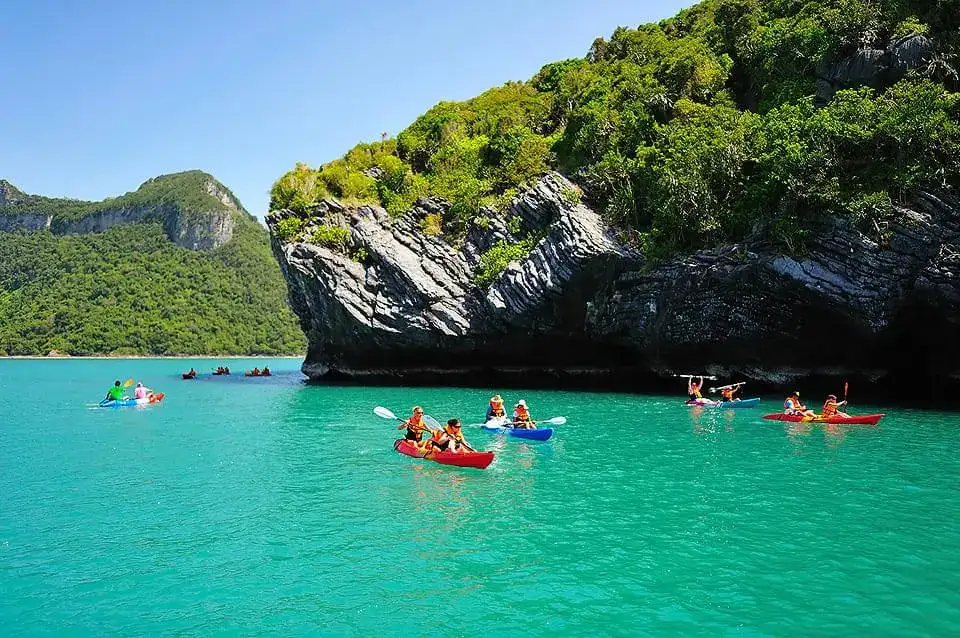
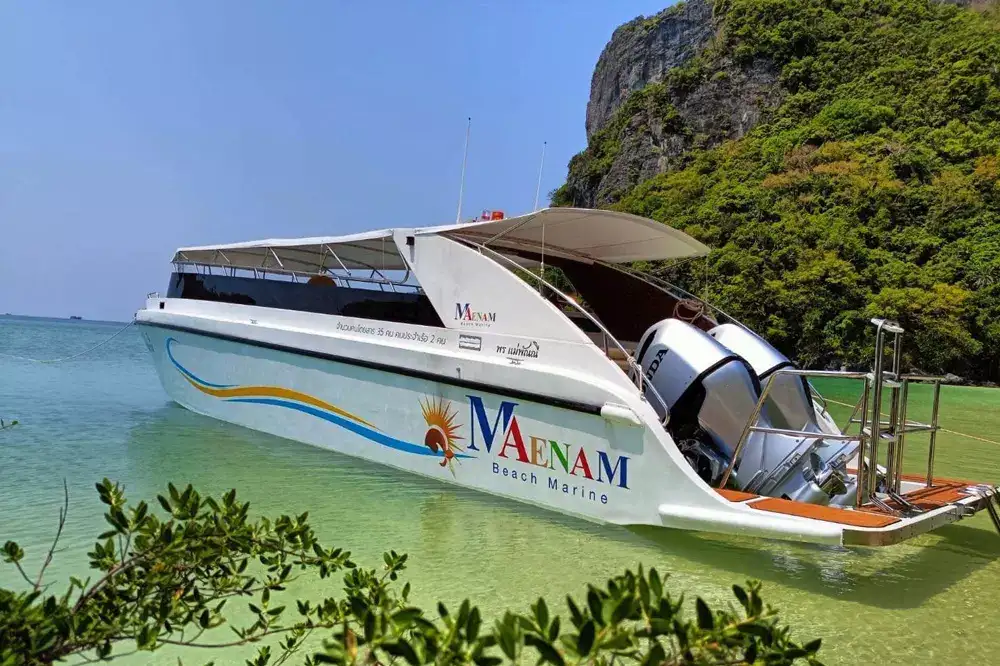
We are an agency, not a boat company: we sell the tours and look after the guests, while the operators run the boats. That matters for you in two ways. First, the operator and the captain alone decide about weather and safety, including changing the route or the order of stops. Second, they know which bays are sheltered and where the reef is deep enough to snorkel without damage.
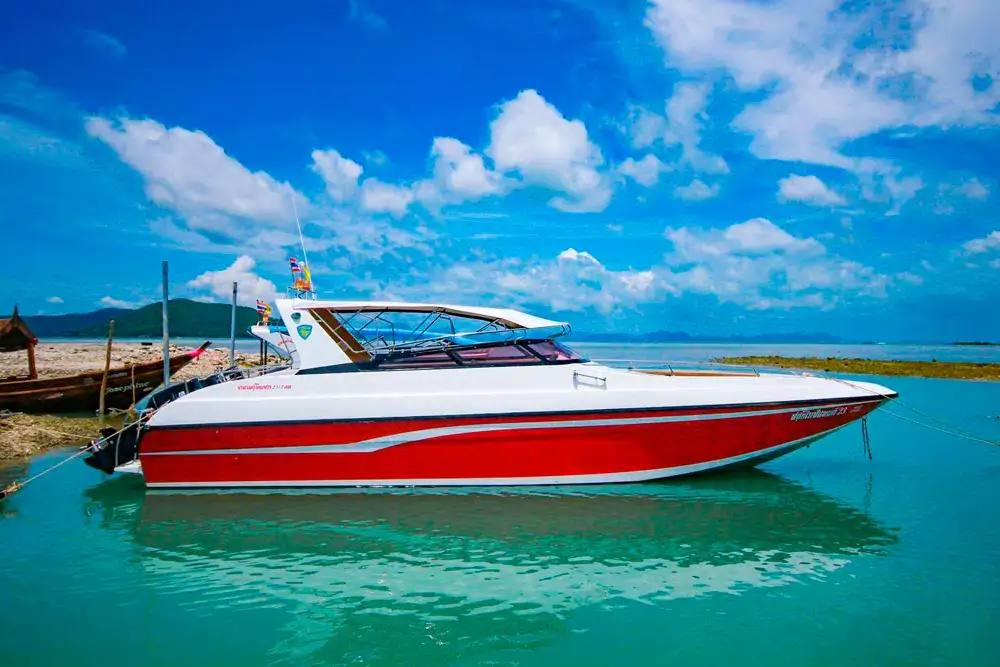
Group size also plays a part. Group speedboats come in different sizes, from two to four engines, and in high season the big three-engine boats take well over 30 people. A smaller group means fewer feet on each beach and a quieter snorkel stop. This table sums up the options from an impact point of view:
| Tour | Group | Park fee | What it means for the islands |
|---|---|---|---|
| Speedboat, ฿1890 | Shared speedboat | Not included, ฿300 adult | Popular and busy; follow the guide closely at the reef |
| VIP speedboat, ฿3890 | Max 16 people | Included | Small group, quieter stops, kayaking at Koh Sam Sao |
| Big boat, from ฿1100 | Large tourist boat | Not included, ฿300 adult | Many people, but on two islands only; optional kayaks |
| Red Baron, ฿3700 | Sailing junk, up to 70 | Included | A slow day under red sails, meals on board |
| Private charter, ฿39,000 | Your group, max 15 | Not included, ฿300 adult | You choose quiet times and spots with the captain |
Which one to pick? The speedboat suits most people who want the classic day at a fair price. The VIP tour suits couples and small families who want fewer people at each stop and everything included. A private boat suits a group that wants its own pace and the quieter beaches.
- Days
- Tue, Thu, Sat
- Time
- 07:00-17:30
- Boat
- Small group, max 16
- Park fee
- Included
- Days
- Daily
- Time
- 07:40-16:30
- Boat
- Shared speedboat
- Park fee
- ฿300 extra
- Days
- Any day
- Time
- 8 hours
- Boat
- Your group only, max 15
- Park fee
- ฿300 extra
The park fee on the other tours is paid in cash at the park: ฿300 per adult and ฿150 per child aged 3-12 and under 130 cm, with children under 3 free. It is part of visiting a national park, and it is already included on the VIP speedboat tour and the Red Baron.
A low-impact checklist for your Ang Thong day
None of this needs special gear or effort. Pack these things and keep these habits, and you have done your part:
- A small bag for your rubbish, and a refillable water bottle.
- A rash guard or a light long-sleeved top for snorkeling, so you need less sunscreen.
- Shoes with grip for the stairs and the trail, so you stay on the path instead of stepping off it.
- Snacks kept in a closed bag on the beaches, and none for the monkeys or fish.
- The life jacket on at the reef if you are not a confident swimmer.
- Photos of the orchids, shells and coral, but nothing taken home.
- Your passport number or a photo of the passport for the insurance at registration.
And plan around the calendar: the park is usually closed from 1 November to 15 December, January to September has the calmest water, and October and the second half of December can be rough. If you are unsure about any rule on the day, ask the guide or a ranger at the headquarters. They would much rather answer a question than repair a reef.
Questions and answers
Does the Ang Thong park fee help protect the islands?
The fee of ฿300 per adult and ฿150 per child is the national park entrance ticket, paid in cash at the park. It is already included in the VIP speedboat and Red Baron prices. Paying it is part of visiting a protected area, the same as in any Thai national park.
Is it safe for the reef to use sunscreen in Ang Thong?
Sunscreen in the water does affect coral, especially in busy, shallow bays. Put it on well before you swim, choose a mineral product if you can, and cover up with a rash guard and a hat so you need less of it.
Can I take shells or coral home from Ang Thong?
Please leave everything where you find it. Shells, coral pieces and plants are part of a protected national park, and the islands only stay beautiful if each visitor takes nothing but photos.
Are there turtles in Ang Thong and can I swim with them?
Green turtles and the rare hawksbill turtle live in the coral gardens of the park. If you see one while snorkeling, keep your distance, do not touch or chase it, and let it swim away on its own.
Why does the guide stop people from standing in the water near the reef?
Because the reefs are shallow and the coral recovers slowly once it is broken. Standing or kneeling for a few seconds can kill colonies that took years to grow, so the guide asks people to float or rest on a life jacket instead.
Can I stay overnight in the park to see it without the day crowds?
Yes, Koh Wua Ta Lap has park bungalows and a campsite run by the national park. Day tours from Koh Samui do not include an overnight stay, so you would arrange it separately.
What happens to my booking if the weather is bad?
Only the tour company and the captain decide about weather, and they may change the route or the order of stops. If the tour company cancels for weather, you get a new date or a full refund including the card fee.
Facts checked against our tour pages on 29 November 2026. Prices and days can change: your manager confirms them when you book.